Flyers work best when the message is short and local
A flyer has one job: get noticed, get read and get acted on. It does not need to say everything about your business. It needs a clear offer, a clear place, and a clear next step. That is why flyers still pull their weight for local promotions in Paarl, Wellington, Stellenbosch, Franschhoek, Worcester and Malmesbury.
People respond better when the promotion is close to home. A Plankenburg trade outlet, a Main Road special in Paarl, or a weekend food promotion in Wellington is easier to act on than a general message aimed at the whole province. Flyers make sense when your audience is already nearby and your timing is tight.
If you are running a one week sale, promoting a new service, or inviting people to an open day, a flyer gives you something physical to leave behind. It can sit on a counter, be handed out at a gate, or go out with a delivery. That small touch still gets picked up while a social post is gone in a few seconds.
Choose flyers when speed matters more than long copy
Flyers are a strong choice when you need a quick turnaround and a simple response. They suit promotions where the customer only needs the main facts, not a full brochure. A clean flyer can carry your price, date, address and a single contact method, then do its job.
They are also useful when your marketing needs to move around town. A rider in Paarl, a contractor in Wellington, or a family business in Franschhoek can hand out flyers at sports clubs, schools, markets and community points where the right people pass through. In those settings, a well printed sheet often feels more direct than a message sent into the noise of a screen.
- New shop openings and launch specials
- Restaurant promos, takeaways and weekend deals
- Estate agent show days and rental notices
- Trade services like plumbing, cleaning or repairs
- Events, fundraisers and club announcements
When the offer is time bound and local, flyers are usually cost effective. You can print the exact quantity you need, test a message in one area, and reprint once you see what gets responses.
Good flyer design keeps the eye moving in the right order
A flyer should guide the reader from headline to offer to action without confusion. That starts with a strong heading, one clear image or graphic, and enough space so the page does not feel crowded. Too much text usually gets skipped, especially on A5 and DL sizes.
The best flyers use print friendly layouts that are easy to scan. Large bold type for the main point, smaller details below, and a clear call to action at the bottom. If the flyer is for a service area, include the town names only where they matter. A long list of places can make the page look busy, so keep it focused on the areas you actually cover.
Colour also matters. Bright colours help with attention, but the combinations must still read well in daylight and under indoor lighting. In the Boland, where flyers may be seen at a storefront, on a windscreen, or on a notice board, legibility beats fancy effects every time.
- Keep the headline short and specific
- Use one main offer instead of three competing offers
- Leave enough white space around prices and dates
- Make the contact detail easy to find at a glance
- Check spelling, phone numbers and suburb names before print
Paper choice depends on where the flyer will be used
The right paper can make a flyer feel useful rather than flimsy. For short term handouts and street distribution, lighter stock is often enough. For flyers that will sit on a counter, go into a folder, or stay pinned up for a while, a thicker sheet gives a better result.
In coastal areas and humid conditions, paper can curl if it is handled badly or left out in damp air. That is why finishing choices matter. A light laminate or a careful trim can help keep the piece neat when it is used in shops near the coast or moved around in vehicles. If the flyer is going to be posted with other paperwork, it should also hold up in transit.
We often see flyers used alongside other printed items such as banners, stickers and business cards. A business might hand out a flyer at a market in Franschhoek, then leave a few extras at the counter in Paarl or Wellington for people who want to take one later. That kind of simple follow up can bring in more enquiries than a single big spend on one big campaign.
Distribution matters as much as the print itself
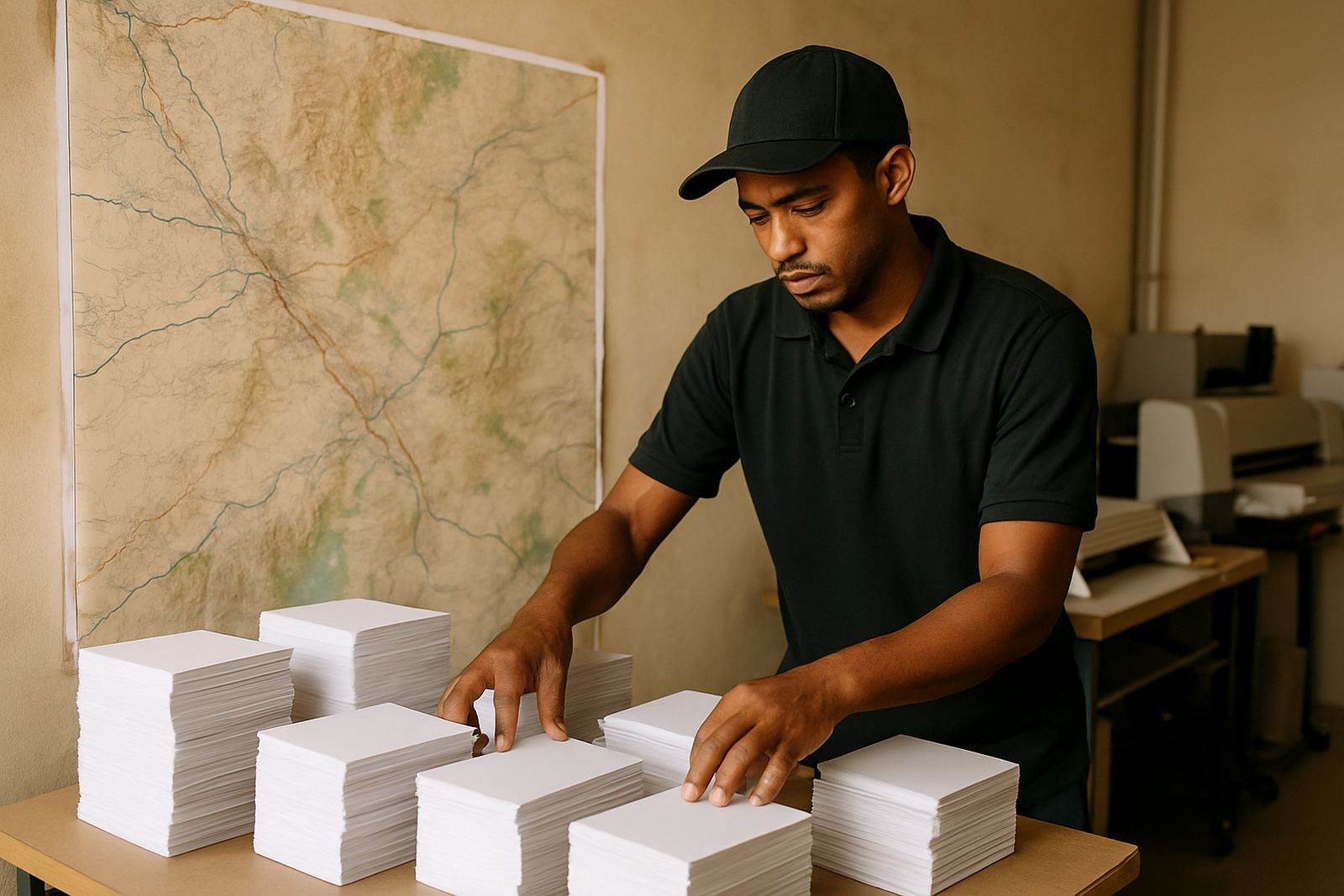
Printing a flyer is only part of the job. Getting it into the right hands is what makes it work. The best distribution method depends on who you want to reach and where they already gather. A flyer for motorbike decals will not need the same route as a flyer for school stationery or a local bakery special.
In the Boland, practical distribution often means a mix of direct handout, counter display and area drops. A local courier route, a trading day, a sports fixture, or a parking area near a busy centre can all be good spots if the message suits the crowd. The aim is not to scatter pages everywhere. It is to put the flyer where a likely customer is already paying attention.
Before you print, ask a few simple questions: who is it for, how far will they travel, and how quickly must they respond? If your answer is “this week, nearby, and with a clear price or date,” then flyers are usually the right tool.
- Hand out near the place where the service is offered
- Leave copies at counters with permission
- Use flyers after a social post to support the same promotion
- Match the print run to the size of the area you are covering
A Paarl example: one flyer, three towns, one message
Consider a local example. A small mechanical workshop in Paarl wants to advertise a winter service special to drivers in Wellington, Simondium and Klapmuts. The business does not need a long brochure. It needs a flyer with the service, the special price, the booking period and the towns it serves. That is enough to get people moving.
The same flyer can be adapted for other areas in the Boland with small changes. For example, a version for Worcester might focus on a different collection point, while a version for Malmesbury could mention a separate delivery route. The core offer stays the same, but the local detail makes the page more believable and more useful.
That is where flyers still earn attention. They work when the message is practical, the audience is close, and the print is easy to read. They do not need to be flashy. They need to be clear, on time and handed out where people are already looking for something to do or buy.
What to bring when ordering flyers
A good flyer job starts with good inputs. Bring the wording, the offer, the towns you want to mention, and any logo or picture files you already have. If the artwork still needs checking, it helps to know the size, finish and distribution plan before print begins. That way the final piece fits the way you will use it.
For area marketing in Paarl, Wellington and the wider Boland, the strongest flyer is usually the simplest one. Clear message, clear date, clear response. That is what gets kept, read and passed on. And when the promotion changes, reprints and updates are easy enough to do without starting over from scratch.