
Why the edge finish matters before the banner ever goes up
Most people look at the print first, but the edge finish is what keeps a banner usable after a week of wind, sun and handling. In the Boland, that matters. A banner in Paarl or Wellington may face strong summer sun, dust, and sudden gusts off open roads or farm entrances. If the edges are weak, the banner starts to curl, tear or pull at the fixing points.
That is why finishing is more than a neat trim. It is part of the structure. A properly finished banner spreads the strain across the whole edge instead of putting pressure on one small point. For outdoor use, especially on longer runs or larger sizes, the finish should suit the place where it will hang and how often it will be moved.
Hems, folded edges and what they do
A hem is a folded edge that gives the banner extra strength. The fold is usually heat-welded or stitched depending on the material and the job. On PVC banners, a hem helps the edge resist fraying and gives a stronger line for the eyelets. On lighter indoor banners, the finish can be simpler, but it still helps the piece hang straighter.
For a banner that will be used more than once, hems are worth it. They help when the banner is rolled up, taken down and put back up again. They also make the banner feel better in the hand. A raw edge can look rough and wear faster, especially near loading bays, schools, sports grounds or shop fronts where people touch it often.
- Use hems for outdoor banners, repeat use and larger formats.
- Choose a neat edge finish for indoor display and event use.
- Ask for reinforced corners if the banner will be under strain.
Eyelets and why spacing changes the whole job
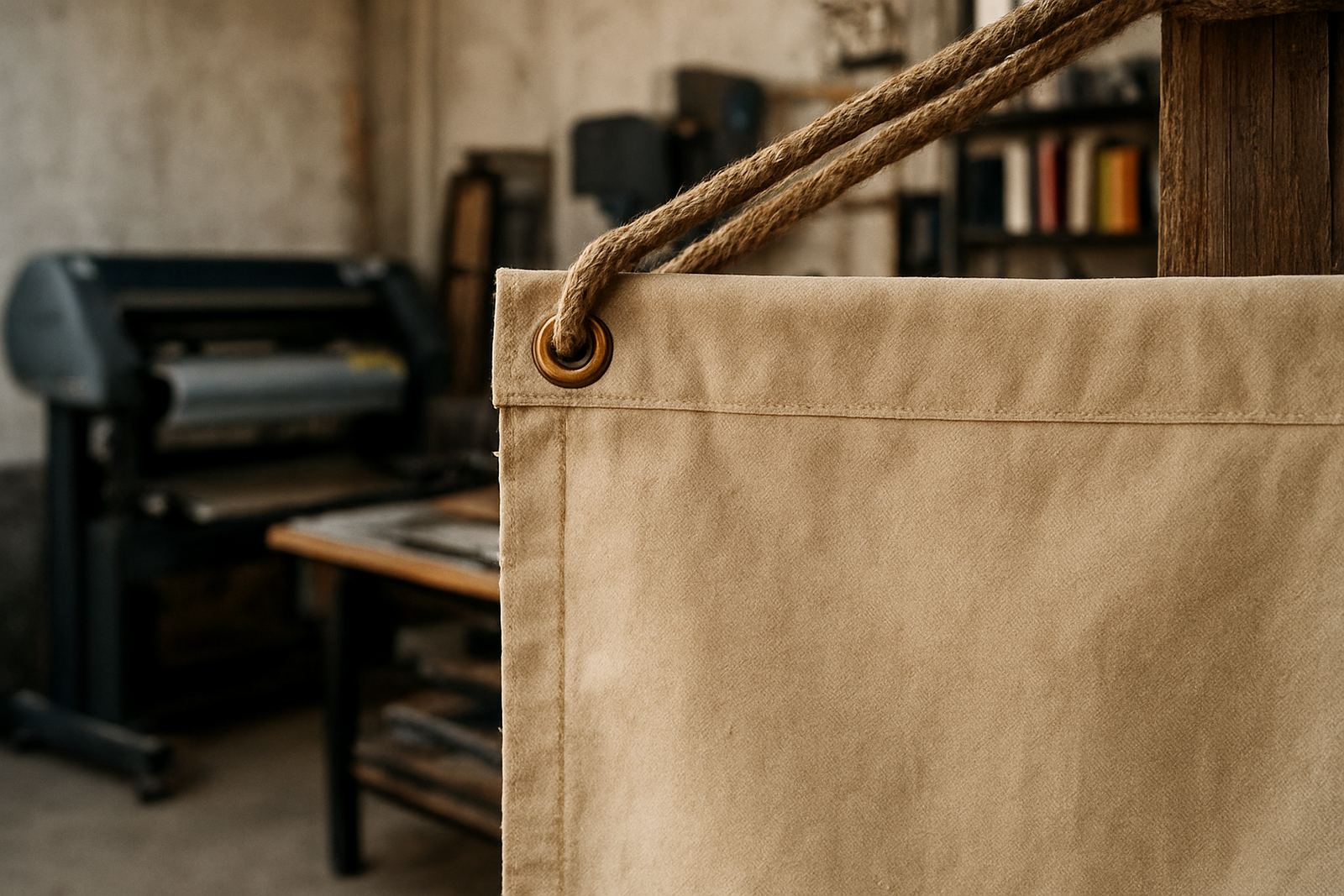
Eyelets are the metal rings fitted into the banner so it can be tied or hooked in place. Their job is simple, but their placement is important. If they are too far apart, the banner can flap and pull in the middle. If they are too close together, the fixings may be overkill and the edge can look crowded. A good layout depends on banner size, wind exposure and the frame or wall it is going onto.
For small banners on a fence or shopfront, eyelets at the corners may be enough. For longer banners, extra eyelets along the top and bottom can help keep the message flat and readable. In windy spots around the R101, industrial yards or open business entrances, closer spacing can reduce strain and help the banner last longer.
- Corner eyelets suit short term or smaller banners.
- More fixing points help on long spans and windy sites.
- Even spacing makes the banner sit flatter and look tidier.
Rope, cable ties, hooks and frame fixes
Once the banner has eyelets, the hanging method becomes the next decision. Cable ties are quick and common for fences, but they can be hard on the banner if tightened too much. Rope works well where there is a frame, pole or rail, and it gives a bit of movement. Hooks are useful when the banner needs to come down often and go back up without fuss.
If the banner is going onto a light box frame, shop frontage or scaffold area, the fixing method should suit the surface. A banner that is pulled too tight can crease. One that hangs too loose can slap in the wind and wear out faster. The best setup is usually the one that lets the banner sit flat while still allowing a little movement in the air.
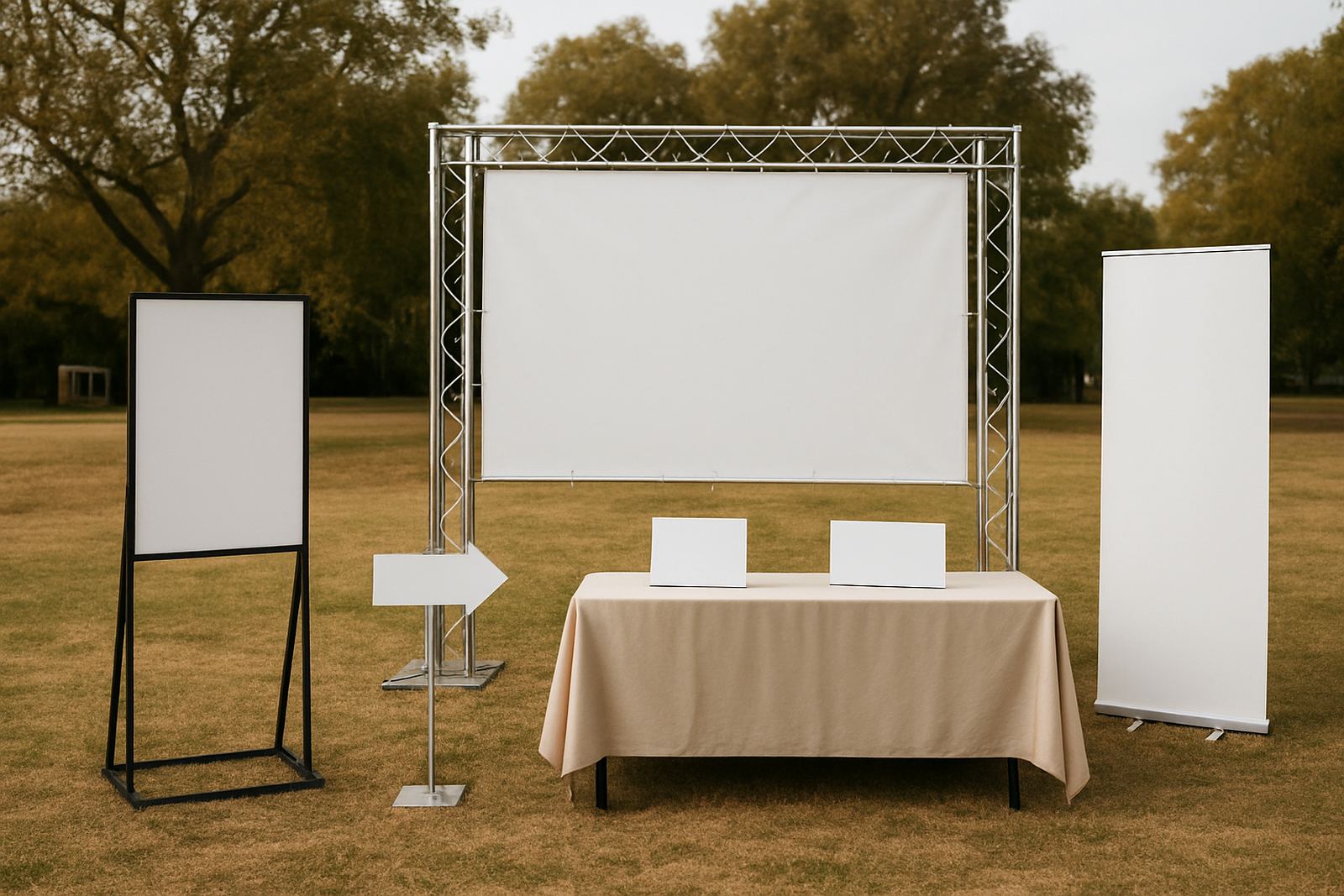
For events in Paarl and surrounding towns, we often look at the site first and then match the banner finish to that site. A market stall, a rugby fence banner and a roadside promotion do not need the same treatment.
Indoor banners, outdoor banners and different finish needs
Not all banners need the same level of reinforcement. An indoor banner used for a launch, awards night or retail display may only need a clean hem and careful eyelets. It will not face weather, but it still needs to hang straight and look sharp under lights. Outdoor banners have to deal with rain, heat and movement, so the finish needs to work harder.
Coastal humidity, common in places closer to the coast and along some trade routes, can also affect how a banner behaves over time. Materials and fixings should be chosen with that in mind. A banner stored wet or fitted in a damp area may need better drying and stronger finishing to avoid early wear. If the banner is going onto a site with load-shedding backup lighting or after-hours use, visibility matters too, so the finish should not fight the print.
- Indoor banners can be lighter and simpler to finish.
- Outdoor banners need stronger edges and more secure fixing points.
- Damp storage and windy sites both shorten banner life if the finish is weak.
A Boland example: getting a banner ready for a windy Saturday
Say a small business in Wellington wants a Saturday special banner for the roadside and it needs to be seen from a passing vehicle. The banner is 3 metres wide, which means a simple four-corner hang would likely leave the middle loose. In that case, a hemmed edge with extra eyelets across the top can make the banner sit better and stay readable through the day.
If the same banner is going onto a fence outside a sports field in Paarl, the fixings may need to be tighter on the sides and stronger at the corners. If it is for a temporary event in Franschhoek, where the banner will be taken down after the weekend, quick-release ties may be the better call. The point is that the finish should match the job, not just the print size.
Good banner finishing saves time later. It reduces callbacks, keeps the message visible and helps the banner survive more than one outing. Small decisions at the edge often decide whether a banner looks tidy on day one and still useful a month later.
What to check before you approve a banner finish
Before any banner goes out, check the size, the final use and the hanging points. Ask where it will go, how long it will stay up and whether it needs to be moved often. That lets the finishing team choose the right combination of hems, eyelets and reinforcement. It also helps avoid the common mistake of ordering a nice print with the wrong way to hang it.
Here is a short checklist that helps most clients:
- Measure the space properly, including clearance for ropes, hooks or ties.
- Decide whether the banner is for indoor use, outdoor use or both.
- Tell the supplier if the site is windy, shaded, damp or exposed to dust.
- Ask for extra support on large banners or repeated installations.
- Check that the final hanging method suits the frame, wall or fence.
When the finish is right, the banner does its job without drama. It hangs true, reads clearly and holds up better in local conditions, whether it is going up in Paarl, Wellington, Stellenbosch or further across the Boland.