
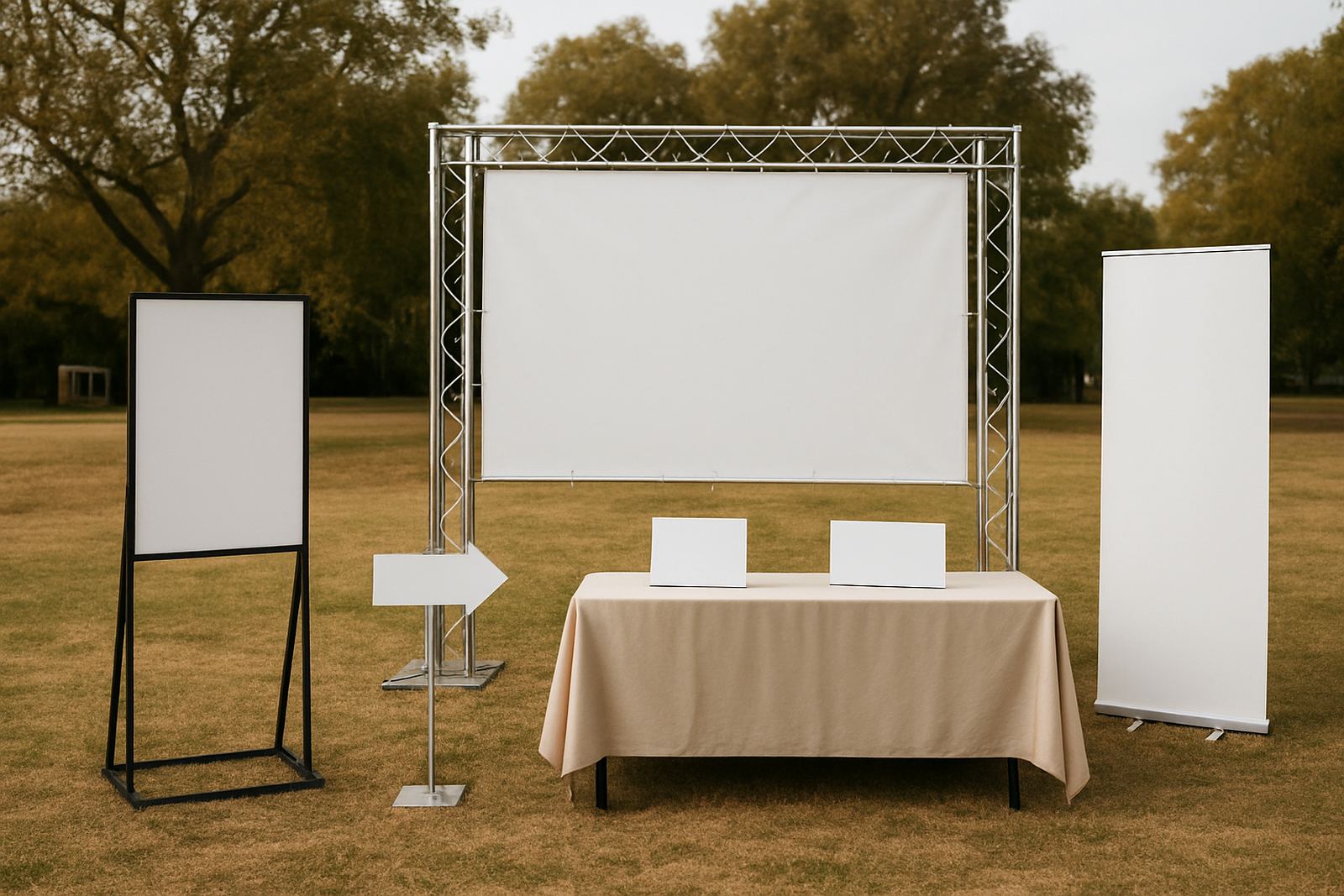
Start with the signs people must see first
Every event needs a few signs that do the heavy lifting before anything else. If guests can find the entrance, the parking, and the registration point without asking three people, you are already ahead.
For a Paarl function centre, a Wellington sports field, or a wine farm near Franschhoek, these are the basics to include early in your list:
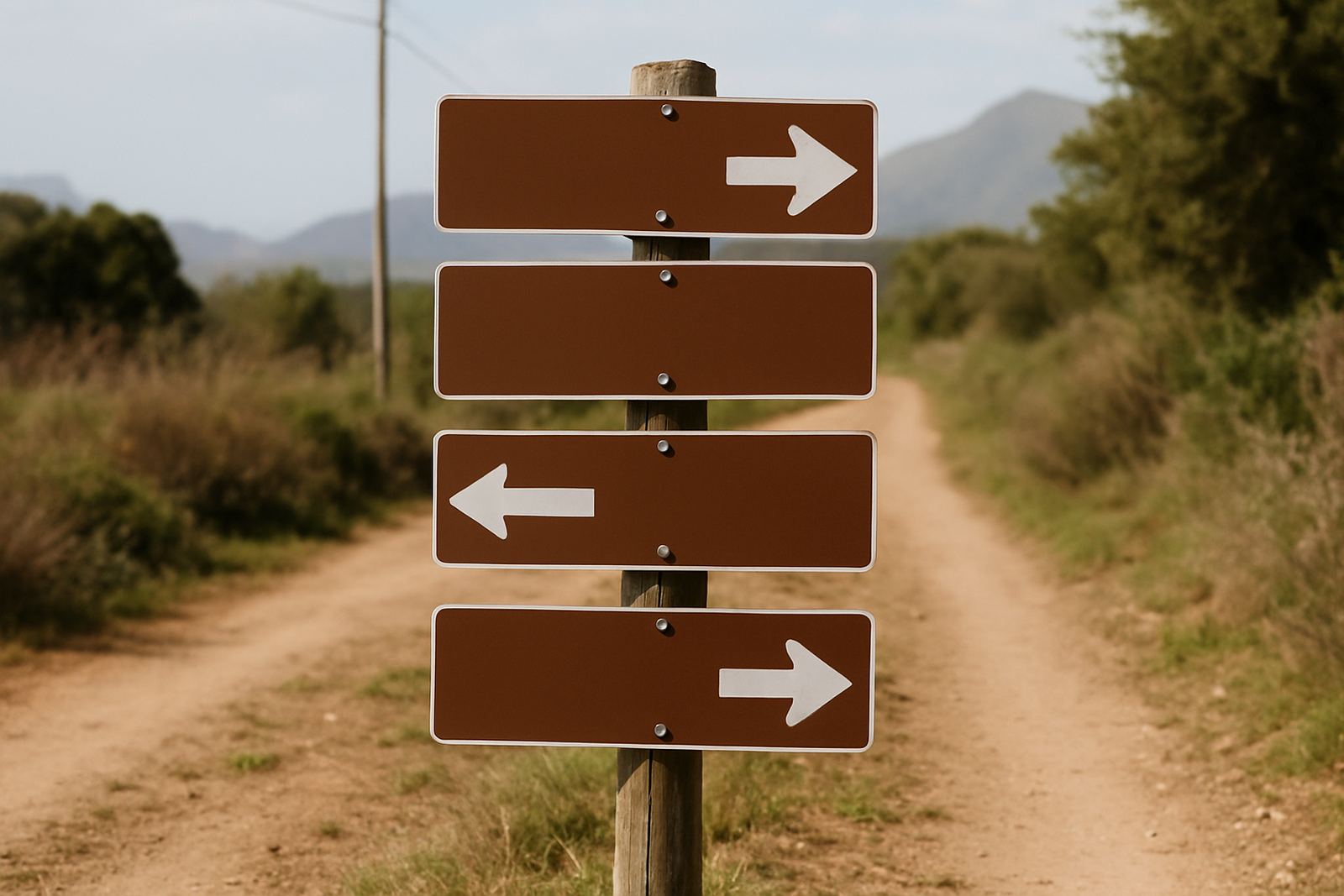
- Directional signs for the entrance, parking and reception point
- Welcome board with the event name, date and venue
- Registration or check-in sign with queue direction
- Programme or timetable board for the main area
- Toilet, smoking and exits signs where needed
Keep the wording short and readable from a distance. If people are driving in from Worcester or Malmesbury, they need quick direction not a long message.
Outdoor events need weather-ready material
Boland weather can change quickly, and coastal humidity can still affect an event held inland. A sign that looks fine at 8 am may start curling, fading or lifting if the material was not chosen properly.
For outdoor events, ask for materials and finishes that suit wind, sun and possible rain. That is especially important for sports days, school fairs, market events and motorbike gatherings where signs may stay up all day.
- Banner prints with reinforced edges and eyelets for tying down
- Correx or board signage for short-term directional boards
- Laminate for printed boards that need extra protection
- Mounted boards for entrances, sponsor walls and stage backdrops
- Weighted or fixed stands for signs in open areas
If the venue has exposed areas, check how the signs will be fixed. A good print job still needs proper fixing or it will flap, twist or disappear with the first strong wind.
Make sure guests can find their way around the venue
Big events often fail on the small things. People arrive at the right place but still do not know where to go next. That is why wayfinding signs should be planned as a set, not one board at a time.
Think through the full movement of the guest from the road to the exit. A simple route map in the right places can reduce delays at the gate and cut down on questions for staff.
- Roadside sign directing cars into the correct entrance
- Parking area markers for standard, VIP or staff bays
- Arrow boards for toilets, food stalls, ticket points and stages
- Safety signs for restricted areas, machinery or access control
- Exit signs for the end of the day when traffic gets busy
For a wedding, expo, church event or trade day in Paarl, it helps to print these signs in one visual style so they read as a set. Matching colour and font sizes makes the venue feel organised and easier to move through.
Bring in print that supports the main event
Not every printed item is a sign, but many events need them on the day. These are the pieces that help guests know what is happening and help your team stay organised.
If the event has sponsors, speakers, teams or stalls, plan the print around the schedule and the number of people attending. Reprints and updates are common when names, times or sponsors change close to the event.
- Tickets or wristbands for entry control
- Flyers or handouts with the programme, map or specials
- Table signs for seating, prizes or reserved areas
- Speaker boards, sponsor boards and stage branding
- Vehicle magnets or decals for shuttle, crew or delivery support
At a Worcester cycle event for example, organisers may need rider numbers, marshal signs, sponsor panels and a few vehicle magnets for support cars. The more moving parts there are, the more useful it is to keep the print list tight and checked early.
Check the artwork before it goes to print
A missing time, the wrong venue name, or a typo on a direction sign can create real problems on event day. Artwork checks are worth doing even when the job feels simple.
Before final print, confirm the basics and make sure the wording matches the final event plan. If your venue, sponsor list or programme changes at the last minute, update all linked signs together so nothing conflicts.
- Spellings of names, towns and sponsors
- Dates, times and contact details on the artwork
- Correct size for the viewing distance
- Colour contrast for low light or shade
- Approved logos, if the event has brand rules
This matters even more when the event site has areas with poor light or loadshedding backup. A sign that depends on a lit area should still be clear enough when power is off.
A simple Paarl event checklist to use before setup
For a local event in Paarl or Wellington, it helps to walk through the site one more time before production. A short checklist can prevent awkward gaps, especially when the venue has several entrances or the event runs across a large outdoor space.
Use this final check the day before printing or fitting:
- Count entrances, exits and parking zones
- List every sign needed for the route from road to main area
- Confirm which items must be weatherproof
- Decide what will be hung, mounted, tied down or fitted to vehicles
- Check whether any signs need to be installed on site before gates open
A practical sign plan does not need to be complicated. It just needs to cover the people arriving, the people working and the people leaving at the end. That keeps the day moving and helps your event look ready from the first car through the gate.