What the Malmesbury brief called for
The client came to us with a practical brief: make a working trailer look professional, keep the branding readable from the road, and allow for removal later if the trailer is sold or repurposed. The trailer was used on local routes around Malmesbury and out into nearby towns, so the graphics had to hold up to sun, dust, gravel spray and the kind of stop-start driving that is common on farm roads and municipal streets.
They did not want anything overdone. The main need was side branding that could be seen quickly at a distance, with enough colour and contrast to stand out without covering every panel. There was also a timing issue. The trailer had to be back in service fast, so the work needed to be planned carefully from artwork through to installation. We kept the layout practical and made sure the graphics could be removed cleanly when required.
Artwork checks and sizing for a moving surface
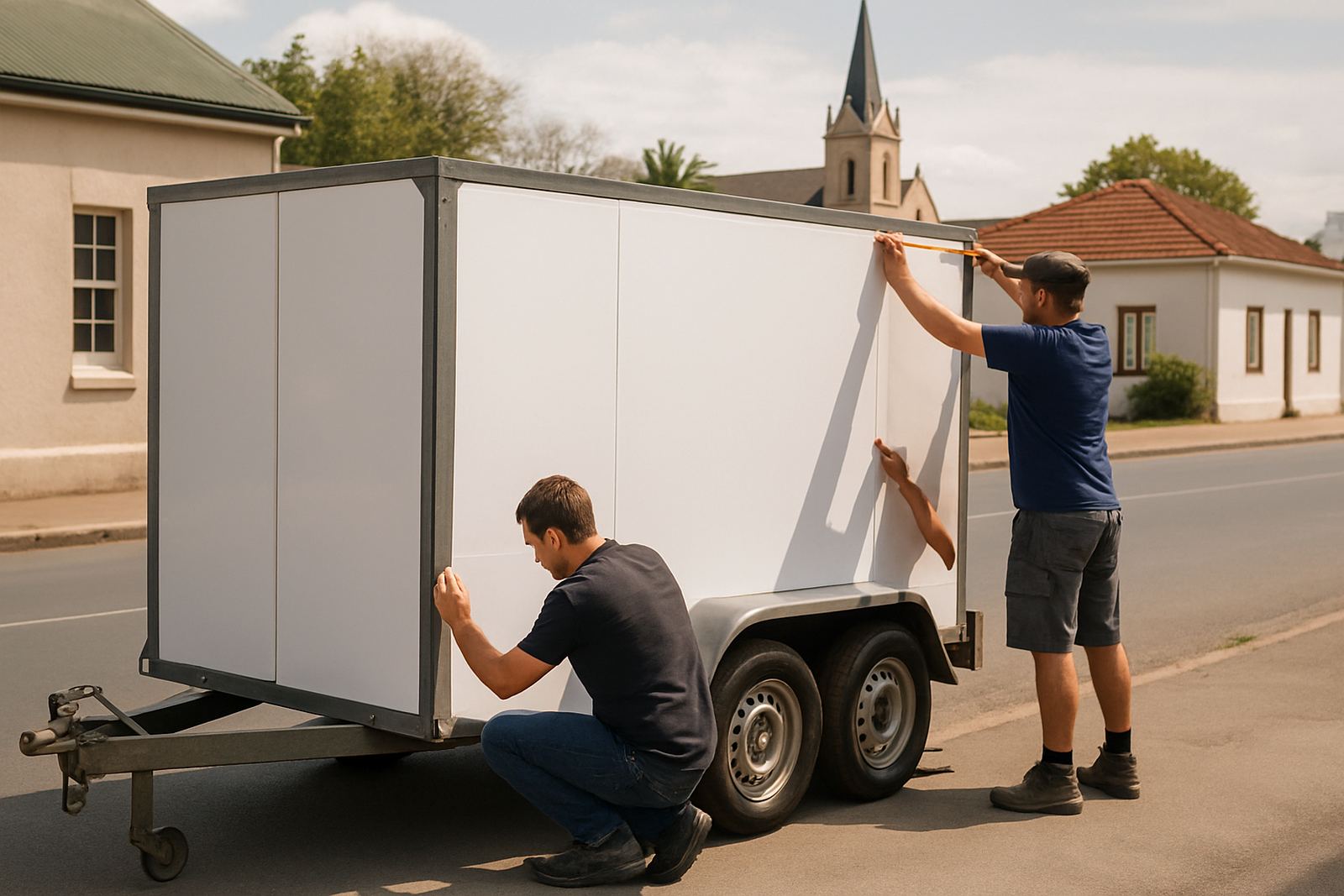
Before any material was cut, we checked the panel measurements and mapped the artwork to the trailer sides. Trailers often have seams, rivets, trims and slightly uneven panels, so a neat fit matters more than people realise. We adjusted the design to avoid critical text crossing joins and made sure the most important information would still read properly from a passing vehicle.
- Measured the usable side panels and allowed for edges, hinges and fittings
- Scaled the artwork for clear roadside reading at short and medium distance
- Checked colour contrast for daylight visibility and overcast conditions
- Set the design up for clean trimming around the trailer structure
Because the client needed removable branding, we chose a vinyl system suited to temporary or semi-permanent use rather than a permanent painted finish. That gave the trailer a clean look now, while keeping the option open for future changes. It also helped with maintenance, because damaged panels can be updated without redoing the entire trailer.
Materials chosen for Boland weather and road use
For this kind of project, material choice is as important as the design itself. Malmesbury heat, winter rain, coastal moisture moving inland, and regular washing can all shorten the life of poor graphics. We used a printed vinyl with protective lamination, then finished it so the edges would stay neat under handling and general use. The lamination adds a useful layer against fading, scuffing and grime.
We also kept the finish practical for the application. A trailer is exposed to more knocks than a shop sign, so the surface had to look good and remain serviceable. The client wanted durable visibility, not a delicate show piece, and that guided every choice we made. It is the sort of work where a little extra care in prep saves trouble later on, especially when the trailer is parked outdoors for long periods.
- Printed vinyl for strong colour and lettering
- Protective laminate for UV and abrasion resistance
- Trimmed edges for a tidy fit on shaped panels
- Removable application suited to future updates
Installation on a working trailer
We completed the fitment in-house and handled the installation so the final result would match the artwork exactly. Trailer fitment calls for clean surfaces, proper alignment and patient application. Any dust or uneven pressure can show later, especially on larger side panels. We prepped the panels, positioned the graphics carefully and worked in sections to keep everything straight.
The trailer had to remain usable, so we kept the installation tight around the edges and made sure no loose corners were left behind. That matters when a trailer is being hitched, unhitched and washed often. The finish needed to look sharp at the yard and still hold up on the road, which it did. There was no need for flashy extras, just a clean, legible result that made the business easier to recognise.
Timeline, handover and the final result
The full job ran over one week from approval to handover. Day one was final artwork checking and sizing, then printing and lamination followed. After that, the graphics were trimmed and prepared for fitting, with installation completed once the trailer panels were ready. The turnaround was quick enough to keep the operator moving, but not rushed. That balance matters when a trailer is part of day-to-day work.
The result was a trailer that now carries the business name clearly on both sides, with a cleaner on-road presence and better recognition at loading points, gate entries and job sites. The branding is strong enough to be noticed but still practical for a vehicle that works hard. It gave the client a more professional look without making future changes difficult.
- Completed in 1 week from sign-off to fitment
- Improved visibility on local roads and at work sites
- Removable finish for future rebranding or resale
- Clean appearance that suits a working fleet or single unit
What we would do again for similar trailer work
If we were doing the same kind of job again, we would follow the same method. Start with accurate measurements, keep the artwork simple enough to read at speed, and use materials that suit South African sun and weather. Trailer branding works best when it is clear, well aligned and easy to maintain. That is especially true for clients who are on the road most days and need signage that does not become a problem after a few months.
For operators in Malmesbury, Paarl, Wellington and the wider Boland, we would again recommend a finish that balances durability with removability. That gives the business value now and flexibility later. Whether the trailer is parked outside, washed regularly or used across different sites, the graphics must keep doing the job. This project did exactly that, and it showed how practical sign work can support everyday business without fuss.
Key facts
| Project | Malmesbury trailer side graphics |
|---|---|
| Client type | Local operator needing removable branding |
| Location | Malmesbury, Western Cape |
| Work completed | Artwork checks, vinyl cutting, lamination and vehicle fitment |
| Timeline | 1 week |
| Finish | Printed vinyl with protective laminate |
| Use case | Road visibility, yard identification and future rebranding |