

Why shared vehicles need removable branding
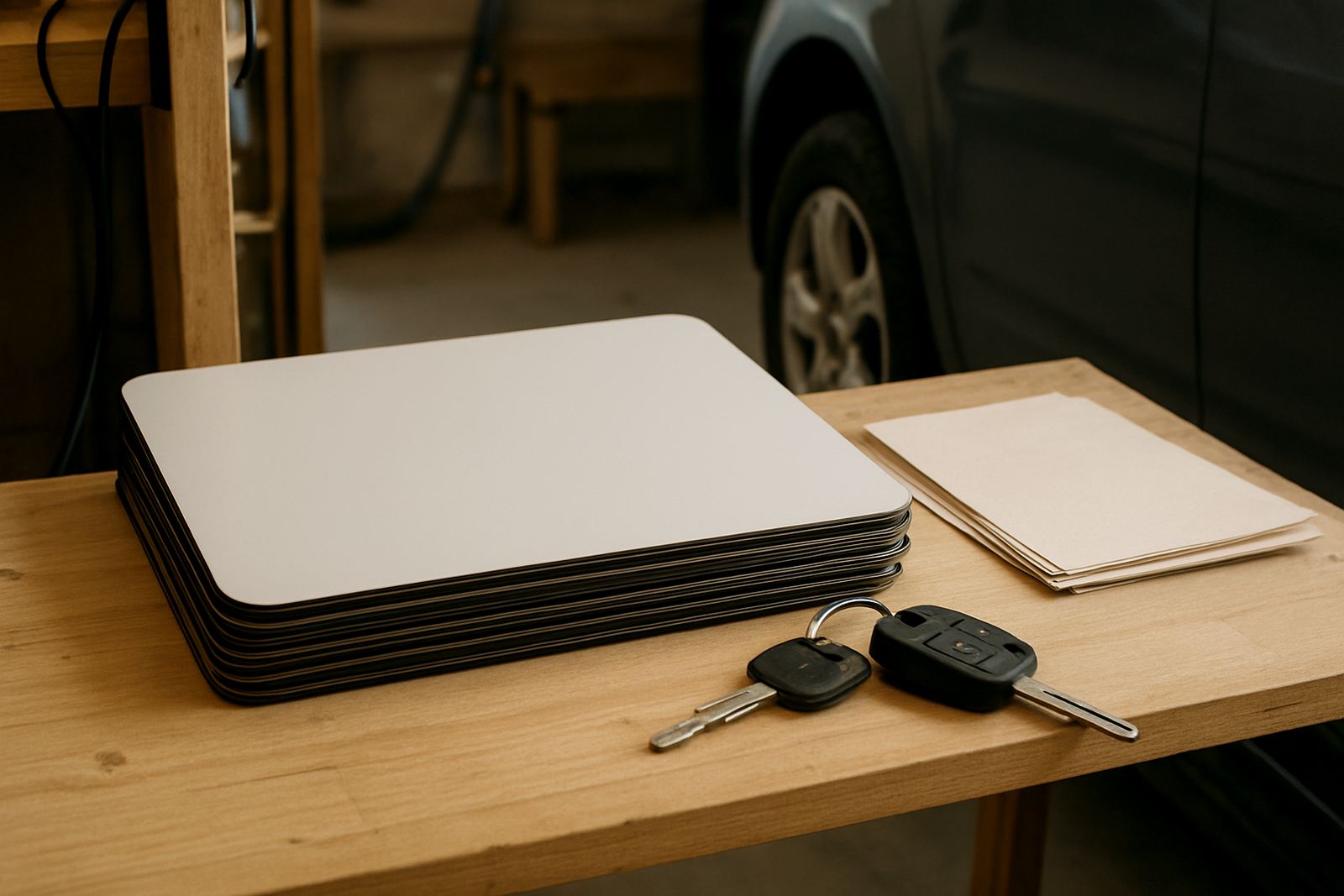
Not every vehicle in a business needs permanent graphics. If one car is used by a few drivers, or if an owner-driver also uses it after hours, magnetic signs are often the better choice. They give you visible branding when the vehicle is working, then come off in seconds when the vehicle is parked at home or handed over to another user.
This matters in places like Paarl and Wellington where a vehicle may do school runs, supplier collections, site visits and weekend family use in the same week. With a full wrap, that message stays on the vehicle all the time. With magnets, you decide when the branding shows. It is a simple solution for pooled cars, small delivery vehicles and contractors who do not want a fixed sign on every panel.
For many businesses, the real value is control. You can use the same vehicle for the business in the morning and personal travel later without explaining why the side door still carries a company message. It also helps if different drivers use the same vehicle on different shifts, because the branding stays consistent no matter who is behind the wheel.
When magnets work better than wraps or stickers
Magnets are not for every job, but they solve a few common problems very well. If the vehicle is leased, borrowed, or shared between family and staff, removable branding keeps the paintwork free of permanent graphics. That is useful when the vehicle must return to a finance house or if the owner wants to keep resale value clean.
They also suit short-term projects. A contractor working on a three month site in Franschhoek may need the vehicle to be branded while on that job, then clear again after the contract ends. A seasonal business in the Boland, such as a farm supplier or event team, can use magnets for the busy period and store them safely afterwards.
- Good for shared company cars and owner-driver vehicles
- Useful for temporary work, rentals, and seasonal contracts
- Easy to remove for private use, cleaning, or servicing
- Lower commitment than a full wrap, yet still visible on the road
If your vehicle is frequently wet, heavily washed, or has a curved panel with poor contact, magnets may need extra care. They still work well in many cases, but the panel condition and daily routine must be considered before you choose the size and placement.
What makes a magnet stay put on the road
A good vehicle magnet is not just a printed sheet with a logo. It must have enough strength to hold on to the panel while the car is moving through wind, dust and road vibration. In the Boland, that means handling gravel roads, rain, summer heat and the odd stop-start trip through town traffic.
Surface prep is important. The vehicle panel needs to be clean, dry and smooth before the magnet goes on. Dust, road grime and wax can reduce grip. For best results, the magnet should be removed from time to time so the panel and the back of the magnet can be cleaned. That avoids moisture build-up and helps prevent marks on the paint.
Good practice also includes checking the edge fit. A magnet should sit flat, not curl, and not cover trims or badges. If it is cut to the shape of the panel and sized correctly, it looks tidy and stays where it should. If it is too large or placed over a ridge, it can lift in the wind. A small typo on the road is one thing, a flying sign is another.
- Wash the panel before fitting the magnet
- Dry both surfaces fully after rain or a car wash
- Remove and clean the magnet and panel regularly
- Do not fit on damaged paint, rust, or heavy body filler
Design choices that keep shared vehicles professional
Because magnets are removable, the design should be clear at a glance. Drivers only get a few seconds of attention at traffic lights or in a parking bay, so the message needs to be simple. Business name, contact detail, service line and a clean logo are usually enough. Too much text can make the magnet hard to read from a distance.
For shared vehicles, we often suggest a layout that works on both sides of the car and on the tailgate or rear door if there is space. That gives you coverage without overcrowding the panel. In commercial use, the rear of the vehicle matters almost as much as the sides, especially when you are caught in traffic on Main Road or pulling into a site in Worcester.
Colour choice matters too. Strong contrast gives better visibility in bright Western Cape sun, while darker vehicles often need a lighter background panel. If the vehicle changes often between day and night use, the magnet should be easy to see but still match the vehicle finish. Good artwork checks before print help avoid cropped text or awkward spacing.
A local example from Paarl and Wellington
Think of a small plumbing business based in Paarl with one bakkie and one shared hatchback. The bakkie does the morning call-outs, while the hatchback is used by different family members during the day. Permanent branding on both vehicles is not always practical. The hatchback may be used for private errands, school pickups, or weekend trips to Wellington and Simondium.
With magnets, the business can fit one set to the hatchback for trading hours, then remove them before private use. The bakkie can carry a larger pair of magnets on the doors and tailgate, ready for site work in Stellenbosch or Franschhoek. If the business changes its services, the magnets can be updated without replacing the whole vehicle sign system.
This is especially handy for owner-drivers who start small. One vehicle can serve as both work transport and family transport, which helps keep costs under control. It also means the vehicle still looks tidy when parked outside home after hours, not like a permanent advert. For many local operators, that flexibility is the main reason they choose magnets first.
Care, storage and when to replace them
Magnetic signs last longer when they are treated as working items, not just something slapped on and forgotten. They should be removed from time to time, wiped clean and stored flat. If they are rolled or bent, they may not sit correctly on the vehicle again. The back of the magnet should always be clean before it goes back on the panel.
Heat can affect performance if the magnet is left on a dirty panel for too long, especially in summer. Coastal humidity and dust can also work under the edges if the sign is not checked. If a magnet starts to curl, crack, or lose its hold, it is time to replace it. If the artwork is still right but the panel has changed, reprints are often the simplest fix.
- Store magnets flat, out of direct sun
- Keep them dry and clean before refitting
- Inspect edges for lifting or wear
- Replace faded or cracked signs before they look untidy
For shared cars, the key is to keep the system simple. A removable sign must still look like a proper business sign, not a temporary patch. When it is made well and cared for properly, it gives you the right balance of visibility and privacy, which is exactly what pooled vehicles and owner-driver setups need.