
Why card stock changes the first impression
When someone is handed a business card, they notice the feel before they read the phone number. A thin card can suggest a short lifespan, while a heavier stock feels more considered and professional. For a plumber in Paarl, a guesthouse in Franschhoek, or a mobile mechanic working between Wellington and Worcester, that first touch matters because the card often sits with a prospect until they need help.
In practical terms, the stock must suit the job. Cards handed out at market stalls, trade counters and site visits should hold shape, keep colour, and survive pockets, dashboards and the odd bit of moisture. If the card starts curling after a week or looks tired after one rainy morning, it is doing less than it should.
Understanding thickness in plain numbers
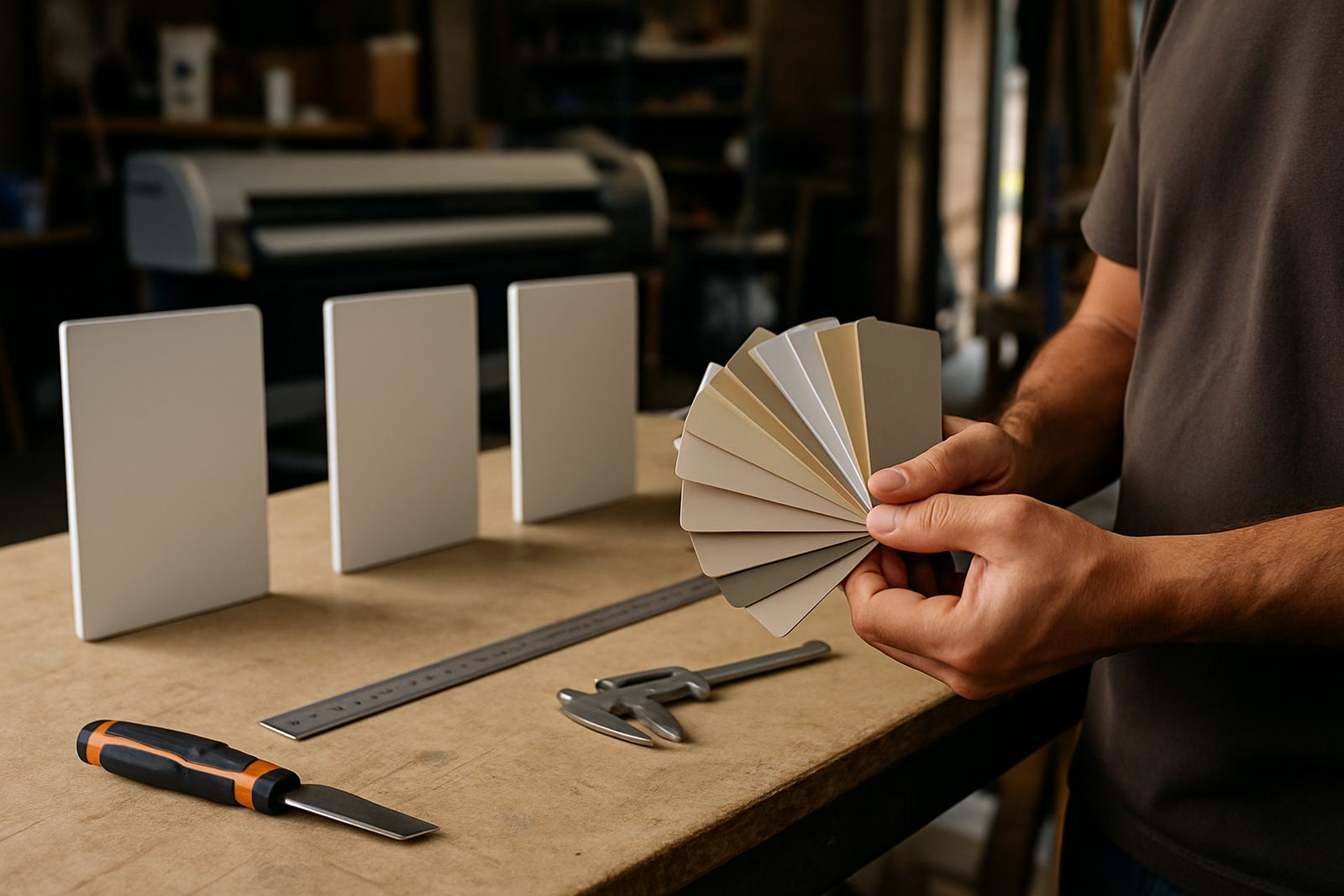
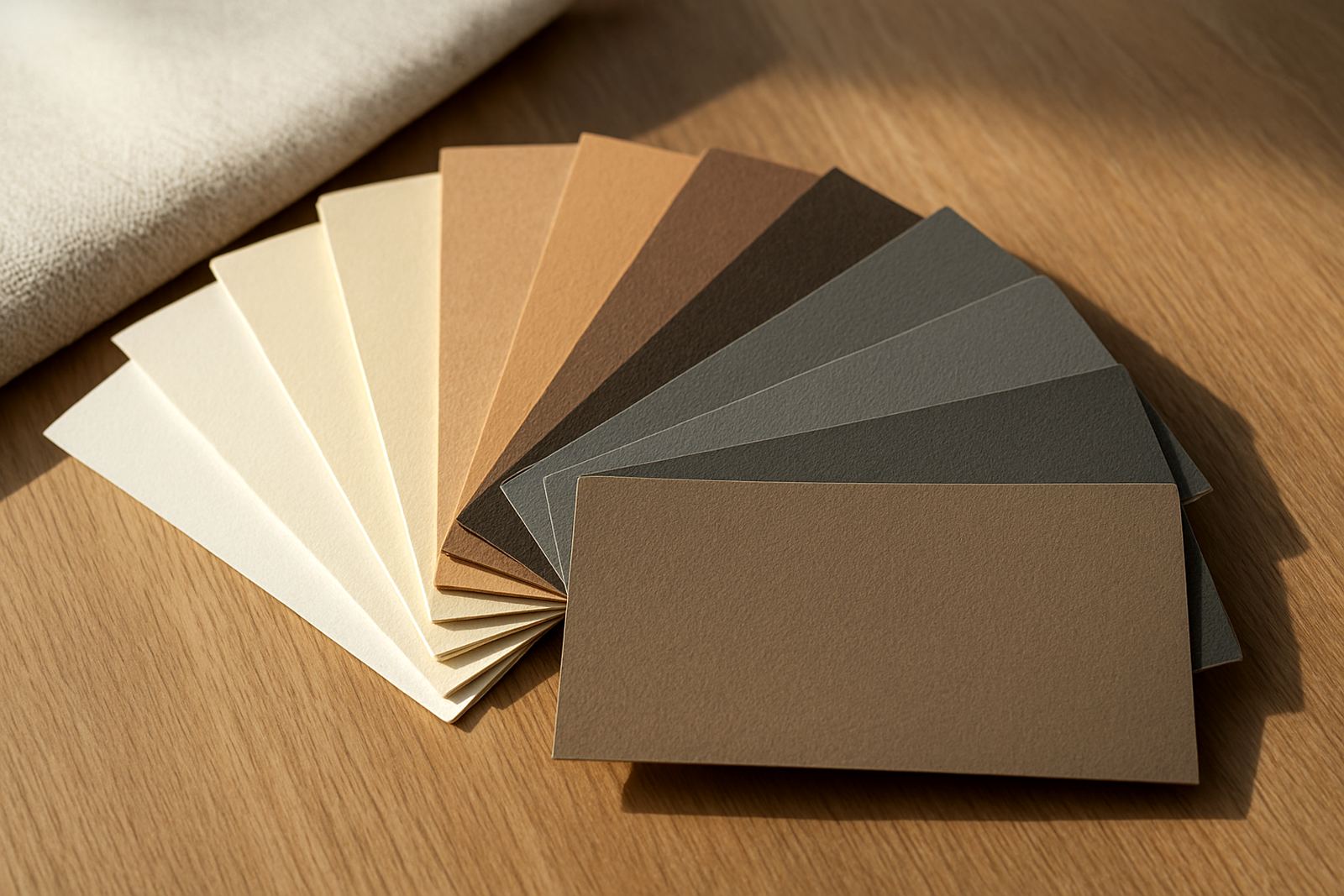
Card thickness is usually discussed in grams per square metre or in microns, and both matter. A standard business card often sits around 300gsm to 350gsm, which gives a firm feel without becoming too bulky. Thicker stocks can reach 400gsm and above, which works well when you want a sturdy, premium feel. The right choice depends on the use, not just the budget.
Heavier is not always better. If a card is too thick, it can feel stiff in a wallet slot, and it may not feed neatly through some holders or filing systems. For teams that hand out large volumes, a middle-weight stock can be the practical option because it still looks good and keeps costs under control. For a one-to-one meeting with a new client, the heavier option can make more sense.
- 300gsm to 350gsm: common for everyday business cards
- 400gsm and above: better for premium presentation
- Light stock: cheaper, but easier to bend and mark
Matte, gloss or soft-touch finish: what each one does
The finish changes how the design reads and how the card handles fingerprints, marks and glare. A gloss finish gives strong colour and a bright look, which can suit bold logos and photo-heavy layouts. Matte is calmer and easier to write on, so it suits cards that need appointment notes, price markings or a quick signature. Soft-touch finishes feel smooth and slightly muted, which can make a card feel more refined in the hand.
For outdoor work in the Boland, finish also affects durability. Gloss can help a card wipe clean if it picks up light grime, but it can show scratches. Matte hides handling marks better, though it can scuff if packed loose with tools or keys. Soft-touch can look smart, but it needs careful handling. A card that is passed around at loading bays or kept in a bakkie cab may do better with a harder wearing finish.
- Gloss: vivid colour, brighter look, shows glare
- Matte: clean reading, easier to write on, less glare
- Soft-touch: smoother feel, more premium, handle carefully
Coated, uncoated and laminated cards explained
Coated stocks have a sealed surface that helps colours print cleanly and keeps ink from soaking in too much. Uncoated stocks have a more natural paper feel and take writing well, which is useful if the card doubles as an appointment card or note card. Laminated cards add a protective film that improves resistance to moisture and wear, especially useful where cards are handled often.
In a place like Paarl, where summer heat and winter rain both play a part, lamination can extend the life of a card. If your team visits building sites, farms or roadside clients, moisture and dust are common. A laminated card can survive more of that daily use. That said, if you need to write on the card often, heavy lamination may not be the best choice.
Some businesses choose a double-sided design with a clean coat on the front and practical details on the back. Others keep the finish simple and use the stock quality to do the talking. Either way, the paper and finish should match the way the card will be used, not just how it looks on a screen.
When local conditions should shape your choice
Boland businesses often hand cards over in very mixed conditions. One minute it is an office meeting in Stellenbosch, the next it is a roadside call-out near Malmesbury or a delivery stop in Worcester. Cards need to cope with heat, dust, vibration and the occasional splash of water. If your cards are stored in a van, toolkit or till drawer, a stronger stock gives you a better result.
Load-shedding can also affect how you plan print runs. If you need a reprint at short notice, it helps to keep the design simple and the stock choice consistent so the next batch matches the last one. That saves time and avoids mismatched cards in the team. A clear, readable layout on a practical stock is often better than a fancy card that does not last.
- For field teams: choose a durable stock with a protective finish
- For receptions and salons: matte or soft-touch works well
- For high-volume handouts: a mid-weight coated stock keeps costs sensible
Matching card stock to the type of business
Different businesses need different results. A legal practice may want a clean, restrained card that feels solid and is easy to file. A motorbike rider may prefer a card that stands up to glovebox storage and workshop handling. A wedding supplier might want a more refined texture, while a trade service provider needs a card that survives being shoved into a pocket with screws and receipts.
Think about how the card will be used in the real world. Will it be handed to one client at a time or left in a display tray? Will it sit on counters, get written on, or be stapled to invoices? These details decide whether you go for a thicker board, a writable finish, or lamination. There is no single best option, only the one that suits the job properly.
Local businesses across Paarl, Wellington, Franschhoek and beyond often need cards that balance presentation with hard use. That balance is where the right stock earns its keep.
A simple checklist before you place the order
Before printing, it helps to work through a short checklist. It keeps the card useful, readable and consistent across the whole team. If the finish is wrong or the stock is too light, the card may need replacing sooner than expected, which costs more in the long run.
- Will the card be written on by hand?
- Will it live in a wallet, a pocket or a vehicle?
- Does the design need a premium feel or a practical one?
- Will moisture, dust or frequent handling be a factor?
- Do you need the same card for the whole team or different roles?
Choosing card stock is not only about looks. It is about how long the card lasts, how it feels when handed over, and what it says about your business before anyone has read a word. Get those things right, and the card does its job quietly but well.