The brief from a busy Wellington service vehicle
The client was a local service business based in Wellington and using a single bakkie for daily calls across Paarl, Stellenbosch, Franschhoek and out towards Worcester. The vehicle was sound and mechanically ready, but the side panels were plain and the branding could not be read properly from the road. They wanted stronger visibility, better recognition at stop streets and on main routes, and a finish that would still look clean after dusty farm roads and winter rain.
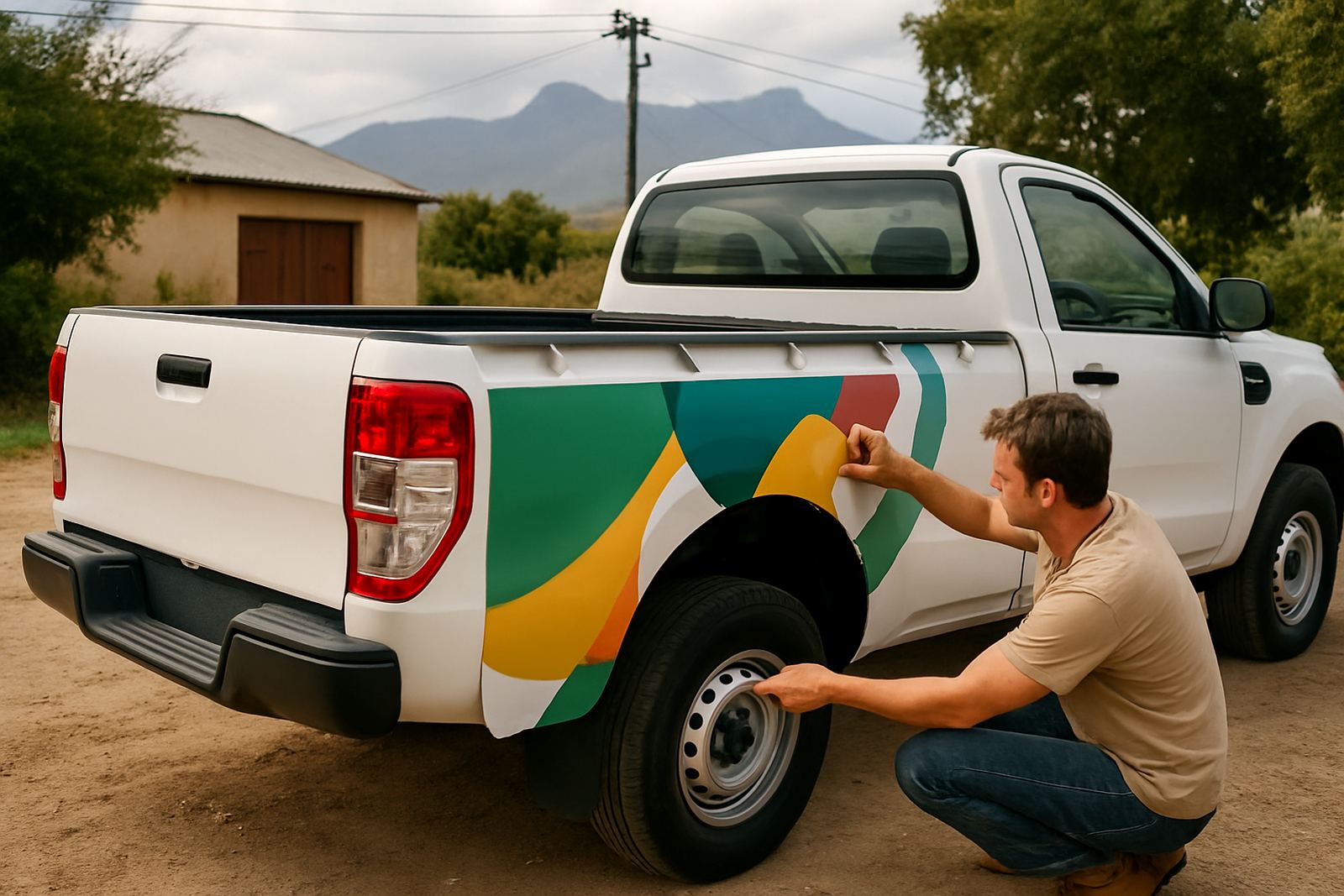
The brief was clear: keep it professional, keep it practical, and do not overwork the vehicle. A full wrap was not needed. What the business wanted was a partial branding solution that would make the bakkie look active and dependable without turning it into a billboard. We also had to work around existing paintwork and light fittings, plus the fact that the vehicle was used every day and could not be off the road for long.
- Vehicle type: single-cab service bakkie
- Location: Wellington, with regular travel through the Boland
- Wrap type: partial bakkie branding
- Main aim: stronger roadside visibility
Artwork checks and panel planning for a cleaner result
Before any print was started, we checked the supplied artwork and mapped it against the bakkie panels so the logos, wording and contact details would sit where motorists can actually see them. On a partial wrap, placement matters as much as colour. If the main message lands too low or gets cut by a handle, wheel arch or fuel cap, the whole job loses impact.
We adjusted the layout for the vehicle shape, checked line weights for clean vinyl cutting, and confirmed the colour balance for outdoor viewing. The artwork was prepared for wide format print, then the panels were measured again against the actual vehicle. That double check helps avoid waste and keeps the install neat. It also makes the final finish look intentional rather than patched together, which matters on working vehicles used by customer-facing teams.
- Artwork checks completed before print
- Panel layout matched to vehicle curves and trims
- Readable branding kept clear of handles and seams
- Print files set for outdoor viewing distance
What we supplied for the wrap
For this Wellington bakkie wrap, we supplied printed vinyl panels, contour cut sections for the branded areas, and laminate to help the finish cope with sun, dust and regular washing. The bakkie was not stripped back for a full coverage job. Instead, we focused on the side sections and rear-facing areas that do the most work on the road. That gave the client a strong visual upgrade while keeping costs sensible.
The material choice and finish were selected for local conditions. Boland sun can be harsh on parked vehicles, and coastal humidity can affect edges if a job is rushed. We used a finish suited to outdoor use and applied the panels with careful heat and edge work so they would settle properly on the body lines. The result was a tidy branded vehicle that still looked like a working bakkie, just one that was easier to spot from a distance.
- Printed vinyl for branded side and rear panels
- Contour cutting for a neater fit around body lines
- Protective laminate for outdoor use
- Installed to suit daily driving and washing
Fitment day in Paarl and delivery back to Wellington
The fitment was handled from our Paarl base, with the client collecting the vehicle after install for immediate use in Wellington. The timing ran over two weeks from first brief to finished handover. That included artwork review, proofing, print, curing, trimming and application. We kept the process tight because the business needed the vehicle back in service quickly and could not wait around for a drawn-out job.
During installation we worked carefully around the existing paint and fittings, then checked the edges and joins before release. A partial wrap can look simple from a distance but the finish depends on the small things: alignment, pressure, heat, and clean edge sealing. The vehicle left with no visible lifting or awkward joins, and the client had a proper branded presence on the road again.
- Project timeline: 2 weeks
- Fitment completed from our Paarl workshop
- Vehicle returned ready for daily service work
- Final checks done on edges, joins and alignment
What changed on the road after the wrap
The biggest change was visibility. Before the wrap, the bakkie blended into traffic and could easily be missed by people who had seen the business name before. After branding, the vehicle started acting like a moving signboard. That matters in towns like Wellington and Paarl where a lot of business comes from repeat sightings, local referrals and drivers noticing a vehicle parked at a job site. Even a partial wrap can lift recognition quite a lot when it is placed well.
The client also gained a more settled and professional look for customer visits. The bakkie now presents as part of a proper service operation, which helps when arriving at homes, farms, workshops and commercial premises. It is a small detail but in this part of the Boland, people notice how a vehicle is kept and what it says about the business behind it. The wrap gave the client a better first impression without turning the vehicle into something impractical for work.
- Improved roadside recognition
- Better presence at job sites and customer addresses
- Cleaner, more organised look for daily service calls
- Useful branding without covering the full vehicle
What we would repeat on the next bakkie wrap
If we were doing this again, we would follow the same approach. Partial branding worked because it matched the way the vehicle is used. It kept costs in line, made the important information visible, and avoided unnecessary coverage on panels that do not add much value. For service vehicles, the goal should always be to make the bakkie work harder for the business, not make the business work around the wrap.
We would also keep the same focus on prepress checks and fitment planning. Good signage on a bakkie is not only about print quality, it is about reading the road, the body shape and the weather that a vehicle faces every day. In Wellington and the wider Boland, that means sunlight, dust, rain and plenty of stop-start driving. A careful partial wrap gives a strong result and holds up well when it is made properly. It is practical, cost-effective and easy to maintain.
- Use partial branding when full coverage is not needed
- Plan around panel shape before printing
- Choose materials suited to sun and regular washing
- Keep the message simple and readable from a distance
Key facts
| Project type | Partial bakkie wrap for a service business |
|---|---|
| Town | Wellington |
| Region | Boland, with work across Paarl, Stellenbosch, Franschhoek and Worcester |
| Timeline | 2 weeks from brief to fitment |
| Services used | Artwork Checks, Large Format Printing, Vinyl Cutting, Lamination, Vehicle Fitment |
| Finish | Printed and laminated partial branding with contour cut panels |