
Full wraps for maximum coverage and a fresh start
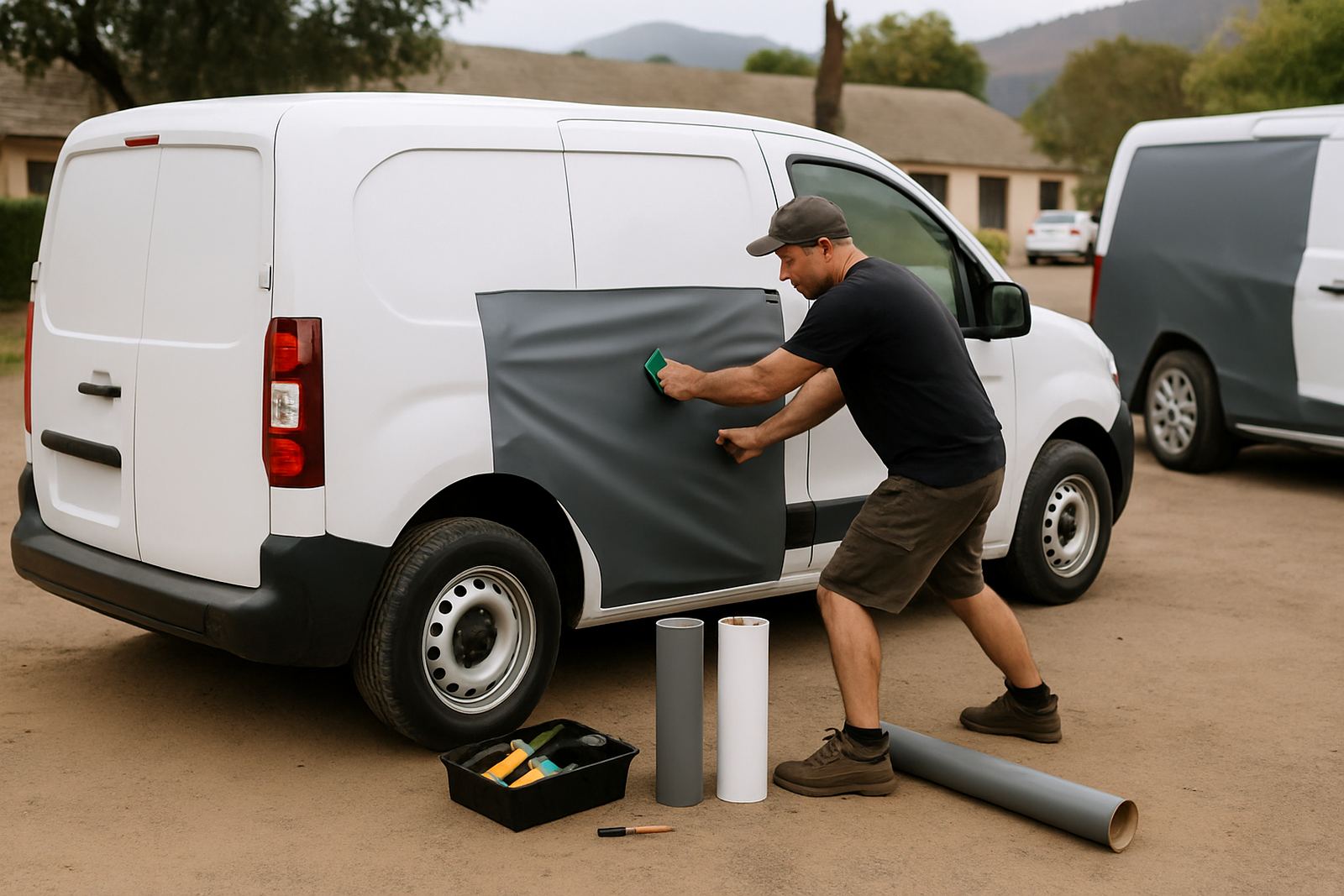
A full wrap covers most or all of a vehicle with printed vinyl. It is the right choice when you want the strongest visual impact, when the paint is tired, or when the branding needs to carry a lot of information. On a bakkie, panel van or delivery vehicle, a full wrap turns plain metal into moving advertising space.
Full wraps suit businesses that spend long hours on the road in Paarl, Wellington and the wider Boland. If your team is in traffic daily, doing site visits, deliveries or collections, the vehicle gets seen from every angle. That matters on the N1, in town centres and outside busy depots where people read a vehicle while it is still moving.
- Best for large areas of colour, gradients and photo-based graphics
- Good when the vehicle needs a complete new look
- Helps hide small scuffs on older paintwork
- Needs proper surface prep and careful fitting around handles, curves and recesses
There is one thing to keep in mind: a full wrap is not only about looks. It also needs good print preparation, panel planning and clean installation. If the design is rushed, joins, seams and edges will show more quickly, especially on vehicles that sit in the sun or wash often.
Partial wraps that stretch the budget without looking thin
A partial wrap covers selected panels only, such as the rear quarter, tailgate, doors or side panels, while the rest of the vehicle stays original. This is often the best middle ground for a company that wants strong branding without paying for full coverage.
For many local businesses, a partial wrap gives enough space for logo, contact details, key services and a bold colour block. It can also work well when the vehicle is leased, because less of the original finish is covered. On fleet vehicles, partial wraps make it easier to keep a consistent look across different models and years.
- Lower material use than a full wrap
- Quicker to fit on many vehicle types
- Useful for fleets with mixed body shapes
- Easy to update when phone numbers or service details change
Partial wraps work best when the design is deliberate. Leaving enough plain body colour can make the branding feel tidy rather than crowded. A clean partial wrap often gives better day-to-day value than a full vehicle covered in too much text, especially when the van spends most of its time parked near a job site or client premises.
Cut vinyl door branding for clear, affordable identification
Cut vinyl decals are individual letters, shapes and logos cut from coloured vinyl and applied directly to the vehicle. This is the simplest option and usually the most affordable. It is ideal for door branding, reg numbers, service labels and small logos that need to be seen clearly from close range.
Cut vinyl is especially useful for bakkies, hatchbacks and small work vehicles where space is limited. If the goal is just to identify the business, show a phone number and keep the vehicle neat, decals do the job well. They are also practical for businesses that operate in dusty areas or on farms, because the design is easier to clean than a large printed wrap.
- Good for logo, names, contact details and licensing marks
- Works well on doors, rear windows and tailgates
- Can be matched to company colours in solid vinyl shades
- Simple to replace if details change
Cut vinyl is not the answer for every vehicle. It does not carry photographic detail, and it will not hide damage. But for many owner drivers, service technicians and small teams, it is the right level of branding. Sometimes less is all you need if the artwork is clean and the placement is right.
Choosing based on how the vehicle is used every day
The best branding choice depends on how the vehicle earns its keep. A sales vehicle that spends most of the day at customer sites may need a polished wrap with a strong first impression. A delivery bakkie that is always loading, offloading and reversing into tight spaces may be better off with hard-wearing decals and rear branding. A fleet that changes often should usually keep the design flexible.
In coastal and inland areas alike, the local conditions matter. Sun exposure, dust, rain, washing, salt air near the coast and general wear all affect how long the finish stays sharp. Vehicles parked outside through load-shedding hours also get more UV exposure over time, so material choice and fitting quality count. A design that looks good in the studio should still read clearly after months on the road.
- Daily mileage and parking conditions
- Whether the vehicle is owned, financed or leased
- How often contact details or offers change
- How much of the vehicle must stay visible for safety or branding rules
There is no single correct answer for every business. The right option is the one that fits the route, the job and the budget without causing extra maintenance later.
What works best for Boland businesses on the move
Across Paarl, Wellington, Stellenbosch, Franschhoek, Worcester and Malmesbury, we often see the same pattern. Businesses start with simple door decals, then move to a partial wrap once the vehicle becomes part of the brand. Others go straight to a full wrap because they need stronger roadside visibility from day one. Both approaches are valid.
A practical example is a contractor running a double-cab between Paarl and Franschhoek. If the vehicle carries tools, visits several sites a day and parks in open areas, a partial wrap on the rear and sides plus cut vinyl on the doors can be the best balance. It gives visibility where people actually look, while keeping the total spend manageable.
For motorbike riders and smaller service operators, the same thinking applies. A bike decal set may only need a logo, number and clear side marks, but it still has to be sized properly for curved panels and movement. The design should remain readable at a stop light and not peel at the edges from wind and washing.
Fitment, finishes and the details people forget
The finish matters as much as the artwork. Lamination helps protect printed wraps from scratches and fading. Window graphics like contra-vision can carry branding without blocking the view from inside. Magnets are useful for temporary branding on vehicles that need to switch between business and private use. When a panel is dented or faded, sign refurbishment and reprints can keep the fleet looking consistent without starting over.
Fitment also needs care. Door handles, rivets, trims and pressed panels all affect how a wrap sits. A well fitted decal should look aligned from a few metres away and still hold up when the vehicle is washed, parked in the sun or used on long daily runs. That is why artwork checks and proper vehicle measurement matter before anything is cut.
- Choose lamination for printed wraps that will face heavy use
- Use magnents only where removable branding makes sense
- Consider window frosting or contra-vision for side glass
- Plan for updates if numbers, routes or services change
If you are deciding between a full wrap, partial wrap or cut vinyl, the right move is usually the simplest one that still does the job properly. Good vehicle branding should be easy to read, easy to maintain and suited to the way the vehicle is used every day.