
What a farm entrance sign must do at first glance
At a farm entrance, people often arrive with limited time and not much patience for guessing. A good sign needs to be visible from the road, easy to read in a moving vehicle, and clear enough for couriers, contractors and family visitors who may be coming in after dark or during load shedding.
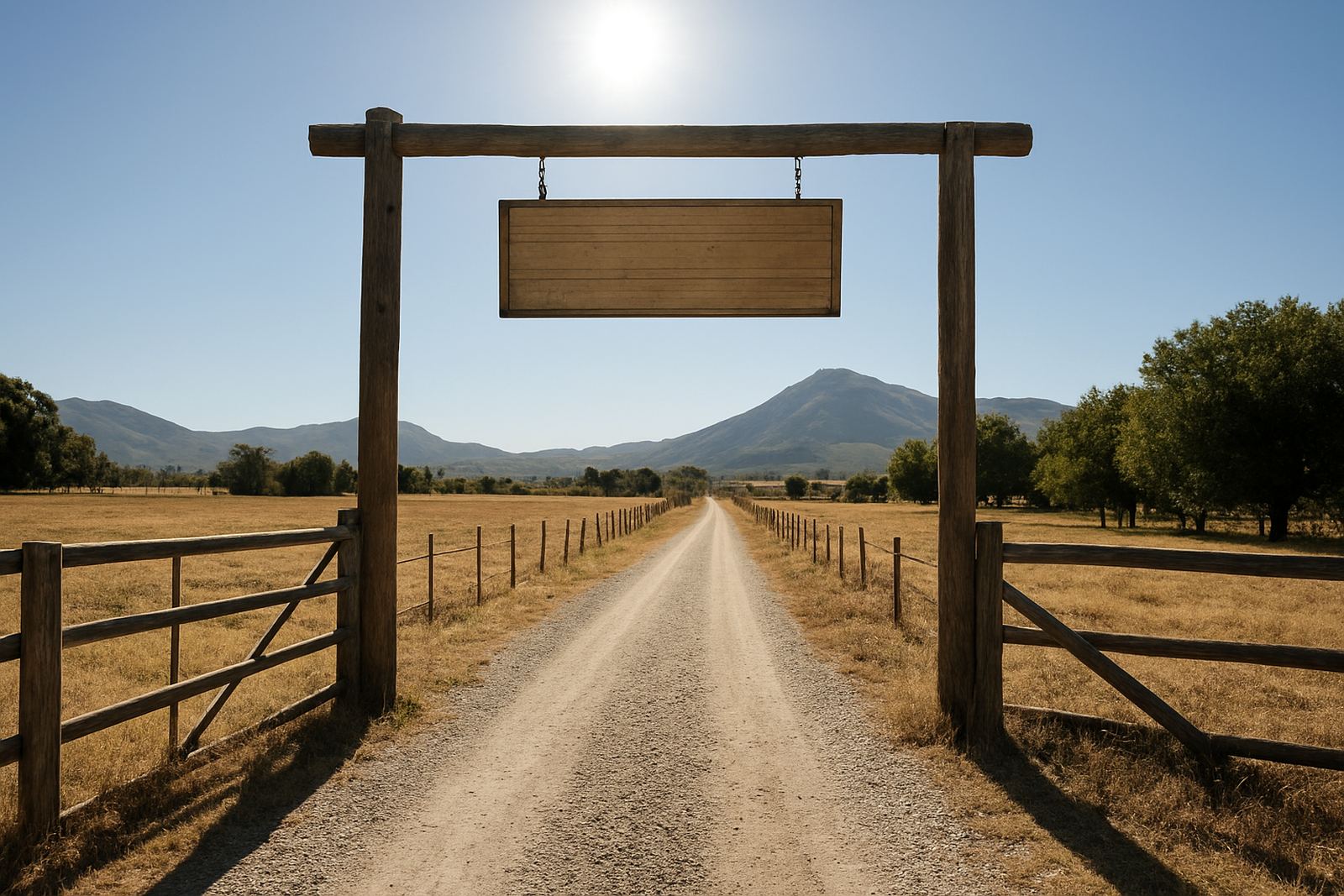
In the Boland, farm entrances deal with bright summer sun, winter rain and road dust from gravel access roads. That means the sign is not only a naming point, it is part of your wayfinding and property control. If the gate is wide, set back from the road, or shared by more than one dwelling or business, the sign should make the direction obvious at a glance.
- Use large lettering that can be read from a car window
- Keep the wording short and direct
- Place the sign where headlights will catch it
- Allow for gate posts, trees and dust that may block the view
Choosing the right material for Paarl and Boland conditions
Material choice matters because a farm sign is exposed every day. In the Paarl and Wellington area, strong sun can fade poor print, while wind and moisture can lift weak edges. Coastal humidity is less of a factor inland than on the coast, but many farms still need signs that cope with morning dew, irrigation mist and regular washing down.
For a long service life, a sign board should be stiff enough not to bow, and the print or vinyl should be protected against scratching. If the entrance sits near an unpaved road, a wipeable finish helps when the sign picks up dust. For a more formal entrance, a mounted board gives a neat look. For temporary access or changing tenants, a removable sign can make more sense.
- Rigid board for permanent farm gates
- Vinyl graphics for clean lettering and logos
- Laminated finishes where there is strong sun or frequent cleaning
- Lightweight options when the sign must be moved or replaced often
How to size the sign for road speed and gate distance
Size should be chosen for the actual approach to the farm, not only for how the sign looks up close. If vehicles slow down before the gate, a smaller board may work. If the entrance is set back from the road, or drivers approach at speed on a provincial road, the lettering needs more height and spacing. A sign that is too small creates hesitation, and that can lead to missed turns or unsafe stopping.
As a simple guide, the text should remain readable from the distance where a driver starts looking for the entrance. At night, reflective elements can help, especially for contractors arriving after dark or during winter evenings. When there are multiple signs on one property, such as house name, workshop, office and delivery point, the layout should prioritise the main gate first and then the secondary directions.
- Large road-facing sign for the main entrance
- Separate directional panels for office, loading bay or residence
- Reflective detail if visitors arrive after dark
- Clear spacing between words and symbols
Wayfinding that works for deliveries, staff and visitors
A farm entrance sign often has to do three jobs at once. It must welcome visitors, direct staff, and help suppliers find the correct stop without phoning for instructions. If the property has more than one access point, the sign should state which gate is for visitors, which is for deliveries, and which one stays closed. That is especially useful on farms that also handle packing, storage, livestock or maintenance work.
For local example, a mixed-use farm outside Wellington may receive fruit pick-ups at dawn, workshop deliveries at midday and family visitors on weekends. In that case, one sign at the main gate can name the farm clearly, while a smaller internal sign can point vehicles to the loading area or office parking. This reduces confusion and keeps traffic moving, which is useful when a tractor, bakkie and delivery truck all arrive at once.
- Use gate names if there are several access points
- Add arrows only where they are needed
- Keep private and public entrances clearly separate
- Include contact directions only if the property manager wants them visible
Mounting details that keep the sign straight and secure
A farm sign that is well made but badly mounted will fail early. Posts should be solid, level and set deep enough for wind. On gravel entrances and on roads with passing trucks, vibration can loosen fasteners over time. If the gate is manual or the area gets regular vehicle movement, the sign should be placed where it will not be struck by mirrors, trailers or gate swings.
Installation also needs to suit the surface. Brick pillars, steel frames, timber posts and boundary walls all need different fixing methods. On farms where maintenance is done regularly, it helps if the sign can be removed for repainting or replaced without redoing the whole structure. A neat fit on site makes a big difference to the finished look, and to how long the sign stays square.
- Check wind exposure before deciding on size
- Allow clearance from gates, hinges and opening arcs
- Use fixings suitable for the post material
- Plan for easy cleaning and future replacement
Practical choices for farms that change over time
Many farm entrances do not stay the same forever. A name changes, a lease ends, a new business moves onto the land or a road layout shifts after repairs. For that reason, it helps to think ahead before choosing the final artwork. If the wording may change later, the sign should be designed so the main information can be updated without starting from scratch.
That is where good artwork checks matter. Text spacing, spelling, spelling of place names and the placement of arrows should be confirmed before production starts. It sounds basic, but on a farm gate sign a small mistake can stay visible for years if nobody catches it before fitting. A clear, practical layout also makes it easier to add a second panel later for new directions, security notes or a separate business on the property.
For farms in Paarl, Wellington, Stellenbosch, Franschhoek, Worcester, Malmesbury, Klapmuts and Simondium, the best sign is usually the one that fits the road, the weather and the daily movement on the land. When all three are considered together, the entrance does its job without becoming a problem.