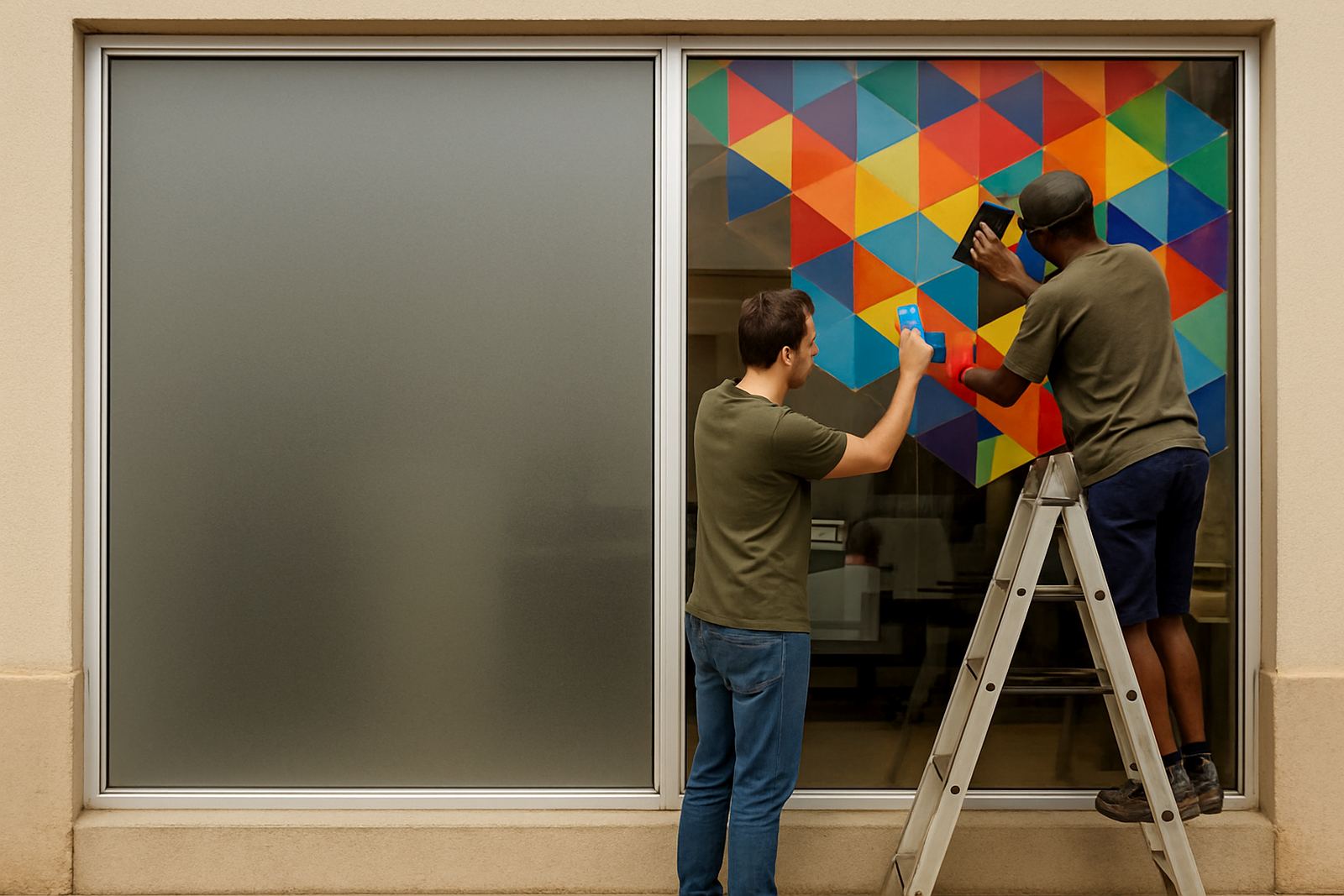
Start with the job the glass must do
Before choosing between frosting and printed film, look at what the glass needs to achieve during a normal work day. A front door in Paarl that faces the street may need privacy for staff and customers, while a meeting room window in Wellington may need just enough screening to stop passers by seeing in. In a shopfront or workshop, the same glass can also be valuable advertising space.
Simple frosting works well where the main goal is to reduce direct visibility without darkening the room too much. Printed film makes sense when the window must carry branding, trading hours, a service list, or a strong visual for people walking or driving past. The right choice depends on the distance people view it from, how much light you want to keep, and whether the message must change later.
In the Boland, those details matter. A farm office in Franschhoek may want a neat low key finish, while a busy street-facing branch in Malmesbury may need bigger lettering that is easy to read from a bakkie moving past. one size seldom suits every opening.
When plain frosting is the better fit
Frosted window film gives a clean, professional finish without turning the glass into a billboard. It is a good choice for offices, doctors rooms, boardrooms, small salons and internal partitions where privacy matters more than promotion. It lets in daylight and helps reduce glare, which is useful in summer when the sun sits hard on west-facing windows.
It is also popular for landlords and tenants who need a neat, neutral look that will still suit the next occupant later. If the space is rented, frosting is often easier to keep within building rules because it does not change the outside look too much and can be fitted in a controlled way.
- Good for privacy without blocking light
- Useful for meeting rooms, reception areas and partitions
- Can be cut into bands, blocks or shapes for a simple design
- Works well where the branding needs to stay subtle
For businesses dealing with cash, client files or workshop activity, frosting can also reduce distraction from the street. It gives the right amount of screening without making the place feel closed off.
When printed film earns its keep
Printed window film is the stronger choice when the glass must talk to the public. It can carry a logo, shop name, opening hours, product categories, safety messaging or a full promotional image. For a retail front, printed film can turn dead space into useful advertising that keeps working every day.
It is especially useful when you need contrast. Frosting is subtle, but it will not always stand out far enough from across a parking area or a busy road. Printed film gives you colour, shape and wording that can be read quickly. On a vehicle showroom, café window or takeaway counter, that quick read is often the difference between someone noticing you or driving on.
- Best for branding, promotion and clear public messaging
- Works well on shopfronts, service counters and vehicle windows
- Can be changed for specials, seasonal offers or new trading hours
- Helps a plain pane do more than just sit there
For riders and drivers, printed film can also be fitted to side windows or rear panels where you want visibility from outside but still need a neat finish from inside. If the design is simple and the wording is short, it stays readable at traffic lights and in slow moving queues.
Mixing frosting and print on the same pane
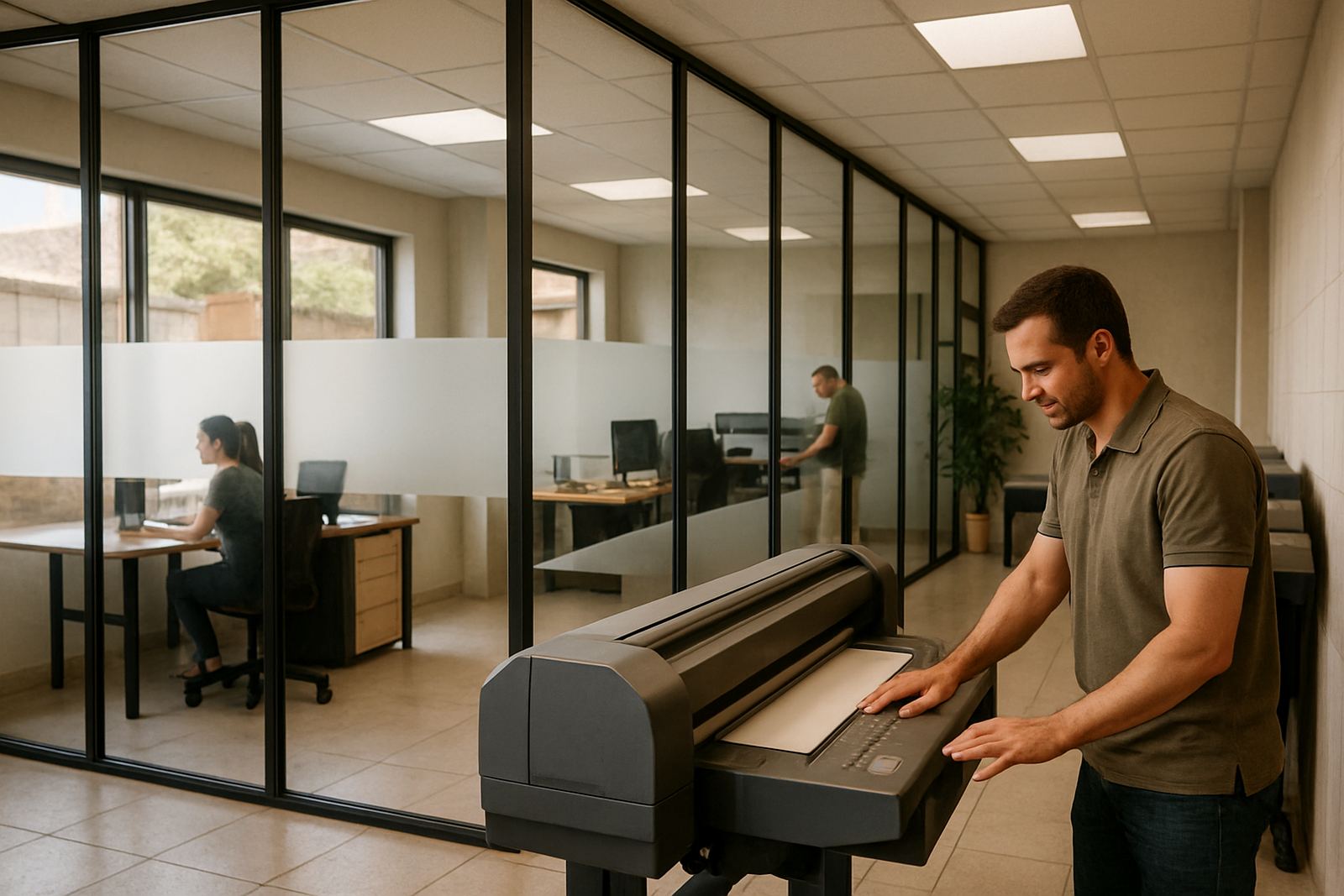
Many of the best window jobs are not fully frosted or fully printed. A mixed layout gives you privacy where it is needed and graphics where they will be noticed. For example, a strip of frosting across the middle of a glass panel can block sight lines at seated eye level, while printed text above it can show the business name and services.
This approach is practical for offices in Paarl where reception and consultation areas share the same frontage. It is also useful in Wellington for trade counters that need both screening and clear naming. Instead of covering the whole pane, the film is used only where it helps the space work better.
The layout can include logos, arrows, opening hours or a simple list of services. In some cases a clear edge around the design makes the window feel lighter, which helps if the room behind the glass is not large. That little bit of planning saves rework later and makes the final finish look considered.
- Frost lower sections for privacy and print higher up for visibility
- Use cut lettering on frosting for a cleaner corporate look
- Keep emergency exits and safety markings visible where required
- Match the window design to the size of the room behind it
Local conditions change the choice
Boland conditions are worth thinking about before anything is cut. Strong sun can cause cheap film to age quickly, especially on west and north facing glass. Coastal humidity in some areas can affect adhesion during installation, while dust on workshop windows can show through if the prep is rushed. Good surface cleaning and correct curing time matter just as much as the film itself.
Municipal rules and landlord requirements can also play a role. Some properties only allow certain levels of coverage on street-facing windows, and some malls or shared buildings want a specific look across all tenants. If the glass faces a public pavement, it is worth checking whether there are any restrictions on signage size, reflective finishes or obstruction of sight lines. A proper site measure helps avoid surprises.
For example, a small office in Klapmuts may only need frosting on the lower half of the glass to give privacy and keep the room bright, while a roadside business near Stellenbosch may need larger printed panels so passing traffic can read the name in a second or two. The right answer depends on how the building is used, not just how it looks from the outside.
How we decide what will last and still look right
The best result comes from matching the film to the job, then making sure the artwork, cutting and fitting are done properly. At Catprints and Signs in Paarl we check the glass size, viewing angle, light levels and the message you want people to see. We also look at whether the film is for permanent privacy, a seasonal special, or a sign that may need to be updated later.
For printed film, artwork checks matter. Letter size, spacing and contrast need to suit the viewing distance. For frosting, the finish needs to be neat at the edges and consistent across the panel so it does not look patchy or rushed. If the glass will be washed often, the installation should allow for normal cleaning without lifting at the corners.
That is why practical advice often starts with a simple question: do you want people to see less through the window, or see more on the window? If the answer is privacy, frosting is usually the first option. If the answer is visibility and message, printed film is usually the better one. In many cases, a mix of both gives the cleanest result and the best value for money.