Start with the job your glass must do
Before you pick a film, decide what the glass needs to achieve during the day. Some windows must show trading hours and a logo, others need privacy for consulting rooms, storerooms or offices, and some must still let in natural light without making the space feel boxed in. In Paarl and Wellington we often work on shop fronts facing strong sun, so heat, glare and fading matter too.
A good window graphic starts with the purpose, then the glass size, then the viewing distance. A small logo on a front door needs a different finish from a full shopfront panel on Main Road or a frosted office partition in a busy business park.
- Do you want privacy, branding, sun control or all three?
- Will people view it from close up or across the street?
- Must the graphic be removable later without damaging the glass?
- Is the glass flat, tinted, curved or divided by mullions?
Clear vinyl for simple branding and clean visibility
Clear vinyl suits logos, opening hours, contact details and small promotional messages where you want the glass to stay mostly open. It works well on entrance doors, office windows and internal partitions. Because the background stays visible, the design must be planned carefully so that text remains readable from the right side and does not get lost against busy interiors.
This option is useful when you want a neat, light look and still want people to see into the space. It is often chosen for salons, clinics and retail counters where the brand must be visible but the room should not feel blocked off.
- Best for logos, trading hours and small text blocks
- Good where natural light must stay high
- Works well on clean, flat glass
- Needs proper artwork setup so the edges register cleanly
On glass near strong sun or coastal humidity, we recommend a proper surface clean and correct lamination if the graphic will face regular handling. Finger marks and dust show quickly on glass, so prep matters as much as the print.
Frosting film for privacy without losing daylight
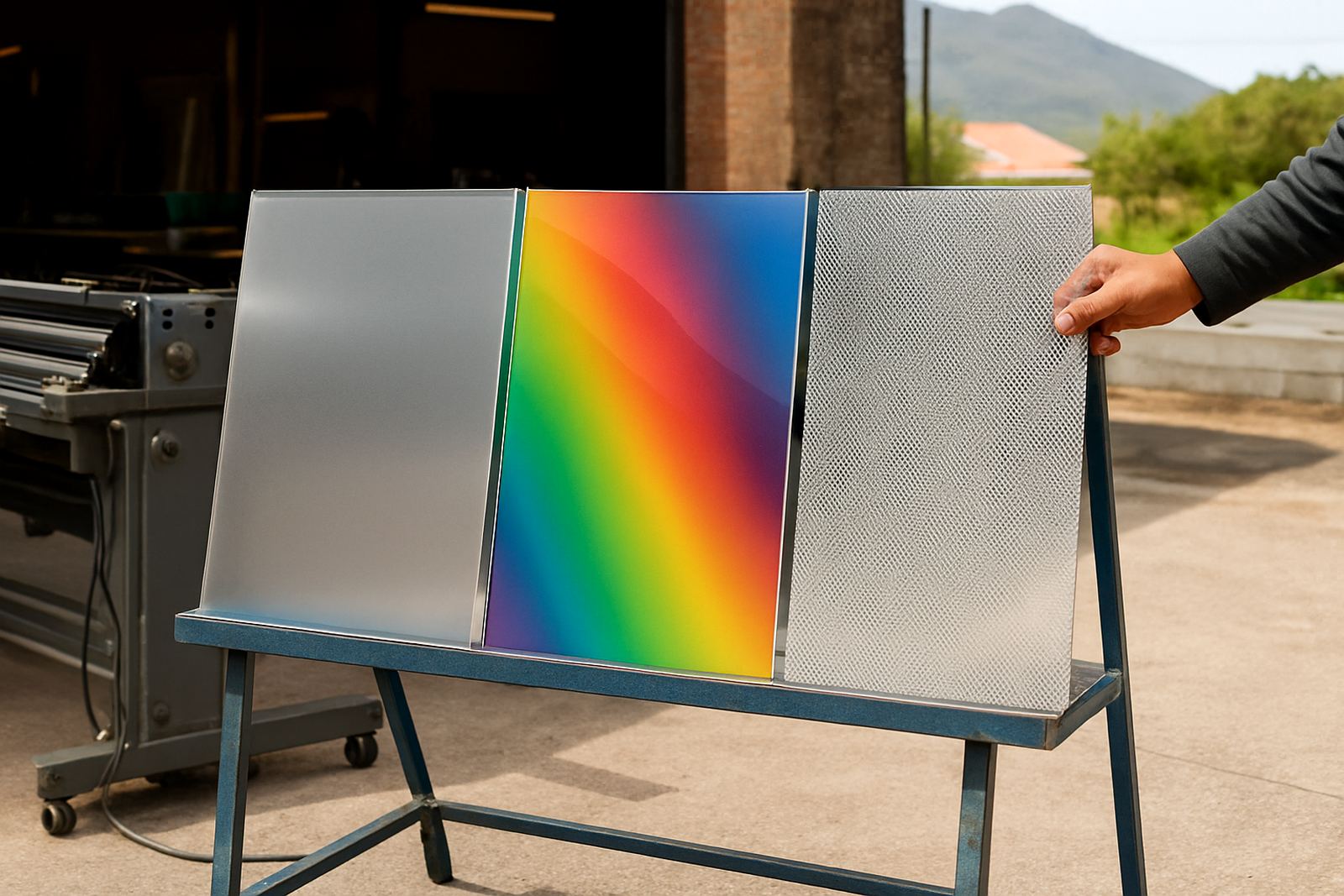
Frosting film gives a sandblasted look and is one of the most practical options for privacy. It is popular for consultation rooms, office partitions, meeting spaces, bathroom windows and shopfronts where you want to soften the view in without making the area dark. In many cases it also helps with glare, especially on windows that face late afternoon sun.
You can keep frosting plain across the whole pane or cut out logos, names and patterns so the branding stands out. That makes it a smart choice for businesses that want privacy with a more formal look. It also helps if you need to comply with interior privacy requirements while keeping the space neat and professional.
- Ideal for offices, clinics, salons and back-of-house spaces
- Can be used full panel or as cut-out graphics
- Lets in light while reducing direct visibility
- Works well on internal glass partitions and street-facing windows
For glass that is regularly cleaned, especially in busy trading spaces, we make sure the edges are well finished so the film stays neat. If you want the branding to stand out more, frosting can be combined with cut vinyl or print on the same pane.
Printed window film for full colour impact
Printed film is the choice for full colour images, product photography, offers and large branding that needs to catch attention fast. It is useful on shopfronts, showroom windows and temporary promotions. A printed panel can cover part of the glass or the full surface depending on how much visibility you want to keep.
This option gives the most room for bold graphics, but it must be planned with the viewing distance in mind. Fine text and busy backgrounds can become hard to read if the print is too detailed. For that reason, a clean layout with strong contrast usually works better than trying to fit too much into one window.
- Best for promotions, large logos and full colour branding
- Good for short term campaigns and seasonal specials
- Can be mounted on external or internal glass
- Needs correct colour matching and print resolution for the size
If the glass is exposed to sun for long periods, ask for the right laminate so the colours last better and the surface is easier to wipe down. This matters in dusty areas, busy streets and coastal locations where salt and moisture can affect exposed finishes.
Perforated film when you need one-way visibility
Perforated film is used when you want a printed exterior face but still need people inside to see out. It is common on vehicle windows, retail glass and office fronts where security or supervision matters. From the outside, the graphic reads clearly; from the inside, the small holes allow outward vision during the day.
This is a practical solution for drivers, riders and businesses with glass that faces the street. It can also help reduce glare and direct heat, though it is not a full privacy solution after dark unless paired with internal blinds or frosting. That point is often missed, so it helps to plan the whole window set-up before ordering.
- Good for vehicle windows and street-facing glass
- Lets occupants see out during daylight
- Reduces direct sun and glare to a degree
- Works best with bold graphics and simple messaging
For vehicles, the film must be fitted carefully around curves, rubbers and heating lines. On shopfronts, the installer needs to check whether the panes are sealed, tiled or framed so the film sits correctly and does not lift at the edges.
A practical checklist before you order
The best results come from a clear brief and accurate measurements. Window graphics are not just about looks, they must suit the glass, the light, the use of the room and how long the graphic must last. If the goal is a quick promotion, the setup can be different from a long-term branded installation on a business premises.
Use this checklist before the artwork is finalised:
- Measure each pane separately, including frames and gaps
- Note whether the glass is inside or outside, tinted or plain
- Choose the finish: clear vinyl, frosting, print or perforated film
- Confirm what must stay visible from inside and outside
- Check if the graphic needs to be removable for future updates
- Tell us if the site has access issues, security gates or height limits
We often see installations delayed because the artwork was sized for one pane but the actual glass had a divider or an uneven edge. A quick site check saves time and avoids reprints. It also helps with windows that face strong wind, frequent washing or heavy traffic where durability matters.
Fitting, aftercare and when to update the graphic
Proper fitting makes a big difference to how long the graphic lasts and how neat it looks. The glass must be clean, dry and free from dust, wax and cleaning residue before installation. After fitting, it is best not to wash the window too soon, and harsh abrasives should be avoided because they can scratch the surface or lift the film edges.
Over time, window graphics may need updates when trading hours change, a phone number changes, or a promotion runs its course. In busy towns like Stellenbosch, Franschhoek, Worcester and Malmesbury, many businesses update windows with seasonal specials or new branding as the year goes on. That is normal and sensible.
- Wait before heavy cleaning after installation
- Use soft cloths and mild cleaning liquid
- Replace damaged sections rather than leaving tired graphics in place
- Update text and offers when the business changes, not after the glass starts looking worn
If you are unsure which finish suits your glass, start with the job the window must do. Once that is clear, the rest becomes easier and the result looks like it belongs there, not just stuck on.