Start with where the poster will be used
The first question is not the artwork, it is where the poster will hang. A poster for a shop window in Paarl needs a different finish to one going up inside a waiting room in Wellington, and both differ from notices that will sit near a doorway with daily foot traffic. If the poster is only for an indoor campaign, you can focus on clarity, colour and cost rather than weather resistance.
For short campaigns, paper weight and finish matter more than extras. If the poster will go behind glass, on a wall board or in a frame, a standard print stock may be enough. If it will be handled often, moved between branches or pinned up and taken down repeatedly, choose a stronger paper or ask for lamination. Coastal humidity can also make lighter paper curl faster, so storage and finishing matter in places where the air stays damp.
- Short indoor promotion: standard poster paper
- Longer indoor display: heavier stock or laminated print
- High handling: ask for extra protection at the edges
- Near moisture or steam: avoid very light paper
Pick the paper weight that suits the campaign length
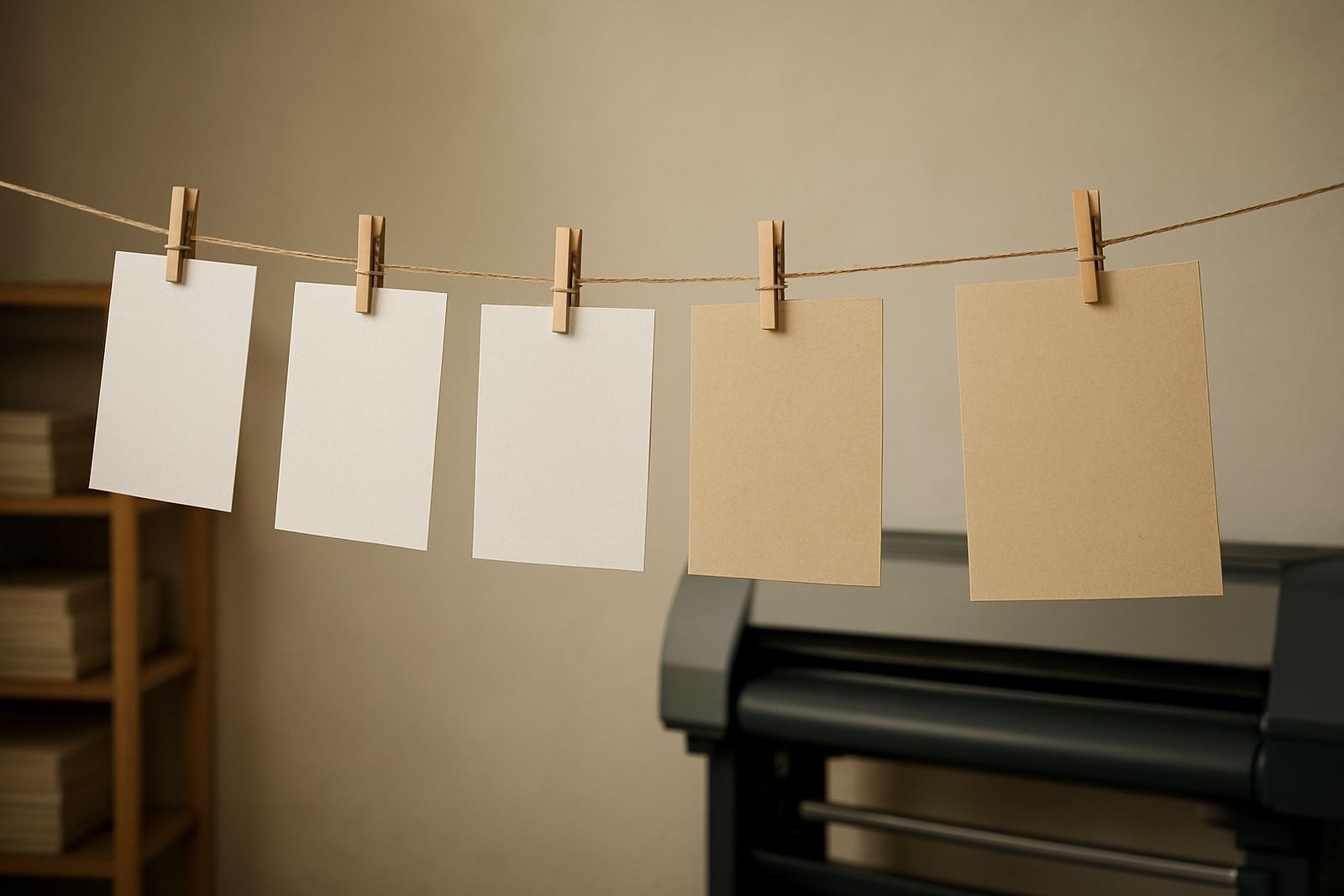
Poster paper is usually chosen by thickness and finish. Lighter stock is suitable for short runs and low-cost notices, while heavier paper gives a firmer feel and sits flatter when mounted. If you are printing a seasonal special for a shop, a community notice or a once-off event, a lighter paper may do the job well. For repeated use, display boards and internal promotions, a heavier sheet lasts better and looks neater from a distance.
As a rule, do not overbuy weight for a campaign that will only run for a few days. That adds cost without adding much value. On the other hand, if you know the poster will be up for a month or more, or it will be moved around between sites, the extra spend on a stronger stock is usually worth it. We often see clients in Stellenbosch and Malmesbury saving money by matching paper to the real life of the poster, not the ideal one.
- 1 to 2 weeks: lighter stock is usually fine
- 3 to 6 weeks: consider heavier paper
- Repeated use: add lamination or board mounting
- Framed display: choose a flatter, cleaner finish
Choose matte or gloss based on the room
The finish changes how the poster reads under light. Matte paper reduces glare and works well in offices, churches, schools and shop interiors with bright ceiling lights. Gloss finish gives richer colour and can make photos and bold graphics stand out more, but it may reflect light from windows or downlighters. If the poster must be seen from an angle, matte is often the safer choice.
For indoor displays in bright entrances or glass-fronted spaces, ask how the light falls during the day. A glossy print can look strong in one spot and hard to read in another. Matte is also easier to photograph if the poster is being used in several branches across the Boland. When the goal is simple reading, such as pricing, dates or safety notes, less reflection usually helps.
- Matte: easier to read, less glare
- Gloss: stronger colour, more shine
- Photos and rich artwork: gloss can help
- Text-heavy notices: matte is usually better
Get the artwork ready before printing starts
Good poster paper cannot fix soft images or missing text. Before printing, check that the artwork is set up at the right size, with enough resolution for the final poster size. A small image stretched too far will look rough, especially on larger wall posters. It is also worth checking spelling, dates, prices and addresses carefully, because small errors stand out once the poster is up.
Artwork checks help catch issues before ink and paper are used. That includes margins, trim lines, colour shifts and whether logos or pictures sit safely inside the print area. If a poster needs to be reprinted later, keep the original file organised so updates can be made without redoing the layout from scratch. That matters for businesses with changing specials or notices that need a quick turnaround when load-shedding changes trading times.
- Use the correct final size from the start
- Check image quality before sending the file
- Leave safe margins around text
- Confirm dates, prices and contact details
Use finishing to protect the poster after printing
Finishing adds life to a poster, especially where it will be handled, mounted or displayed for longer than a week. Lamination can help protect the surface from marks, moisture and fingerprints. Board mounting gives a poster a firmer body, which is useful for wall displays, retail promotions and presentation pieces. If the poster must sit in a window or near a doorway, finishing can help it stay tidy for longer.
Not every poster needs every finish. A single-day event notice may only need a clean print and a simple frame. A menu board or indoor promotional poster may benefit from lamination, while a display for repeated use is better mounted on board. Think about how often staff will touch it, whether it will be moved and whether the room gets warm or damp. In some Wellington and Paarl spaces, a poster near a kitchen or reception area can change quickly if it has no protection.
- Lamination: better for handling and wipe-downs
- Board mounting: keeps posters flat and presentable
- Framing: suits longer indoor display
- Simple pin-up: fine for short campaigns
A quick poster paper checklist before you order
Before you place an order, work through a simple checklist. It saves time and prevents reprints. Start with the purpose of the poster, then match the paper weight, finish and size to that purpose. After that, check the file quality and confirm whether you need any finishing. If the poster is for several branches or sites, make sure each version has the correct town, dates and local detail.
For short campaigns, keep the process simple. For repeated campaigns, store the correct paper choice and finish details so the next run is quicker. A clear system also helps when several people are involved in approvals, which is common for businesses and schools across the Boland. The more consistent the choices, the easier it is to reprint without delays.
- Where will the poster be displayed?
- How long must it last?
- Will it be handled or wiped down?
- Do you need matte, gloss, lamination or mounting?
- Is the artwork final and correctly sized?
When a poster is not the best option
Sometimes another format works better than paper. If a notice will be outdoors, exposed to wind or fixed to a fence, a banner, rigid board or vinyl sign may last better than a poster. If you need a window display with visibility through the glass, contra-vision or window graphics may be a better fit. For repeated use, magnetic signs or updated panels can also be more practical than reprinting the same poster over and over.
That does not mean poster paper has no place. It is still a smart choice for indoor campaigns, temporary promotions, event notices and display boards where you need clear colour without a big spend. The key is to use it where it works best and choose a stronger format when the environment demands it, otherwise you may end up paying twice.