
Start With the Wall, Not the Artwork
Before you choose a canvas size, stand back and look at the wall as a whole. A canvas should sit comfortably in the space without looking cramped or lost. For most rooms, the finished piece works best when it covers about two thirds to three quarters of the usable wall width above a couch, bed, sideboard or reception counter.
Measure the wall in millimetres if you can, then note the furniture below it. If a couch is 2,100 mm wide, a canvas around 1,400 mm to 1,700 mm wide usually feels balanced. For a narrow passage or guest room, a single vertical canvas can work better than a wide layout. In smaller spaces, even a 600 mm by 900 mm piece can hold its own if the wall is clean and uncluttered.
For homes in Paarl, Wellington and the wider Boland, sunlight matters too. Bright rooms can handle bolder sizes and darker images, while shaded rooms often suit lighter tones and simpler compositions. A wall near a window may also need a finish that reduces glare so the image stays readable through the day.
Pick the Right Size for Each Room Type
Different rooms call for different canvas proportions. A living room wall can take a statement piece or a small series. Bedrooms usually feel calmer with one main image, while guest spaces often need something neat and easy to enjoy at a glance. Offices and reception areas benefit from sizes that show clearly from a few metres away.
- Living room: 900 mm to 1,800 mm wide, depending on the wall and furniture below it.
- Bedroom: 600 mm to 1,200 mm wide, especially above a headboard or small wall section.
- Guest room: 450 mm to 900 mm wide for a tidy, welcoming look.
- Office or reception: 900 mm to 2,400 mm wide, depending on viewing distance and brand presence.
- Passage or stair wall: Tall formats such as 600 mm x 1,200 mm or 800 mm x 1,600 mm work well.
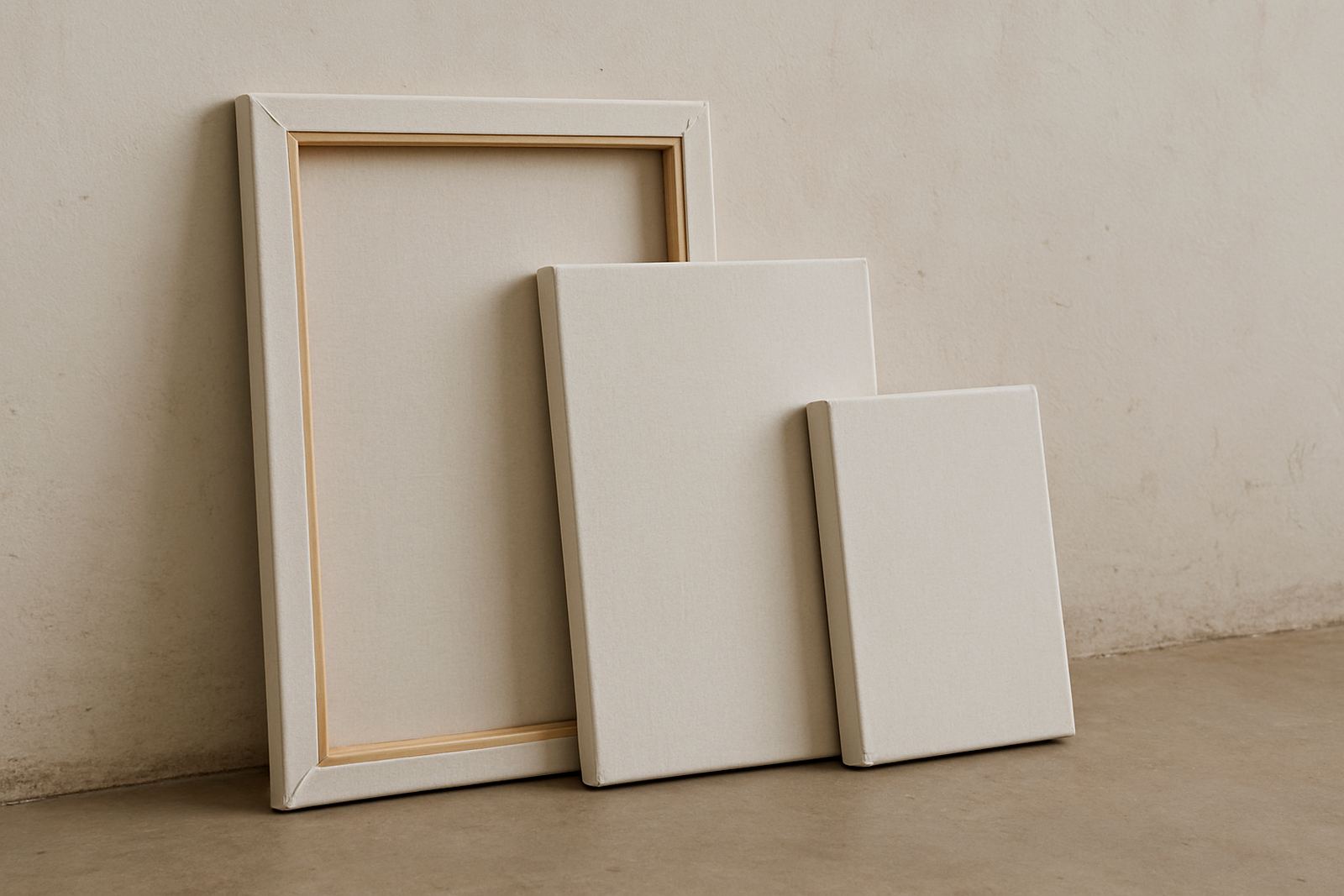
If you are hanging more than one canvas, keep the spacing even. A gap of 50 mm to 100 mm between panels is usually enough. Too much space breaks the image apart, while too little can make the set feel cramped.
Measure for the Hanging Height and Viewing Distance
A canvas can be the right size and still feel wrong if it hangs too high or too low. The centre of the artwork should usually sit near eye level, which is roughly 1,500 mm from the floor in many homes and offices. Above furniture, leave a practical gap of 150 mm to 250 mm so the piece does not sit on top of the couch or counter.
For large office walls, step back and check the view from the doorway and from a seated position. A reception canvas should be readable from at least 3 m away, so fine detail needs a bigger format. In a small study or meeting room, a mid-sized canvas can be enough if the detail is clear and the colours are not too busy.
One useful trick is to mark the size on the wall with masking tape before ordering. This gives you a real sense of scale and helps avoid a piece that feels too small once it is up.
Choose the Best Orientation and Layout
Canvas orientation changes how the room feels. Horizontal canvases suit couches, reception counters and wide office walls. Vertical canvases work better beside doors, in narrow hallways and on slim wall sections. Square canvases are often the easiest option when you want a neat, balanced look without committing to a long or tall format.
If your image is panoramic, do not force it into a square. Likewise, a portrait image will often look awkward when stretched across a wide wall. Matching the orientation to the image saves on cropping and keeps important parts of the artwork intact. Where the image is not wide enough, a border can help it sit properly on the canvas face.
- Horizontal: Best for wide furniture and open wall space.
- Vertical: Good for slim walls and compact rooms.
- Square: Useful for clean layouts and grouped wall displays.
- Triptychs: Three-panel sets suit long walls when you want visual movement without one oversized piece.
Match the Canvas Size to the Artwork Quality
The size you choose must suit the file or image quality too. A small, sharp image can be enlarged, but only up to a point before it starts to soften. For best results, supply the highest quality artwork you have. If the image came from a phone, check that it is still clear when viewed full screen. If it was taken at an event or in low light, it may need adjustment before printing.
Simple artwork, logos and bold photos can handle larger canvases better than images with very fine detail. If your design includes small text, avoid making the canvas too large unless the source file is clean and properly set up. As a rule, strong contrast and clear shapes read better from across a room, while fine detail suits smaller sizes closer to the viewer.
When in doubt, send the file with the room measurements and explain where the canvas will hang. That makes it easier to suggest a size that fits both the wall and the artwork without guesswork.
A Quick Pre-Order Checklist
Before you place an order, use this short checklist to avoid delays and reprints. A few minutes of checking can save time and make the finished piece look right first time.
- Measure the wall width and height in millimetres.
- Measure the furniture below the canvas if there is any.
- Check the viewing distance from where people will stand or sit.
- Confirm whether you want one canvas or a grouped set.
- Decide on horizontal, vertical or square orientation.
- Make sure your image or artwork is clear and correctly sized.
- Think about glare, sunlight and room colour before you choose the finish.
If the canvas is for a business, also think about how it will look under indoor lighting during load-shedding or in a room with mixed light sources. A clean, balanced design usually works best in those conditions, especially in offices, guest spaces and customer-facing areas.
Common Size Choices for Boland Homes and Offices
In and around Paarl, Wellington, Stellenbosch, Franschhoek, Worcester and Malmesbury, the most practical canvas sizes often fall into a few reliable ranges. Smaller homes and guest rooms usually suit 400 mm x 600 mm, 600 mm x 900 mm or 800 mm x 800 mm. For main living areas and office feature walls, 900 mm x 1,200 mm, 1,200 mm x 1,800 mm and larger sets are often the better fit.
There is no single best size, but there is a size that suits your wall, your furniture and the way the room is used. If the canvas is meant to impress visitors, a larger format usually gives better presence. If it is there to finish a room without taking over, a smaller or mid-sized piece is often enough. The right choice is the one that looks right when you stand in the room, not just on paper.
Catprints and Signs works with business owners, homeowners and property hosts across the Boland to help match canvas sizes to real walls and real spaces, not guesswork.